

Partial fraction decomposition rewrites a rational expression as a sum of simpler rational expressions. The form of the decomposition depends on how the denominator factors, including distinct linear factors, repeated linear factors, irreducible quadratic factors, and repeated quadratic factors. This process is especially useful when simplifying rational expressions and evaluating certain integrals.
Lesson
Practice Problems
Decompose the following fractions.
\(\textbf{1)}\) \(\displaystyle\frac{8x+10}{x^2+2x} \)
The answer is \( \displaystyle\frac{5}{x} + \frac{3}{x+2} \)
\(\,\,\,\,\,\,\displaystyle\frac{8x+10}{x^2+2x} \)
\(\text{Step 1: Factor the denominator.}\)
\(\,\,\,\,\,\,\displaystyle\frac{8x+10}{x\left(x+2\right)} \)
\(\text{Step 2: Use Partial Fraction Notes}\)
\(\,\,\,\,\,\,\displaystyle\frac{8x+10}{x\left(x+2\right)}=\frac{A}{x}+\frac{B}{x+2}\)
\(\text{Step 3: Multiply all terms by the denominator.}\)
\(\,\,\,\,\,\,8x+10=A\left(x+2\right)+Bx\)
\(\text{Step 4: Solve for }A\)
\(\,\,\,\,\,\,8x+10=\left(A+B\right)x+2A\)
\(\,\,\,\,\,\,2A=10\)
\(\,\,\,\,\,\,A=5\)
\(\text{Step 5: Solve for }B\)
\(\,\,\,\,\,\,A+B=8\)
\(\,\,\,\,\,\,5+B=8\)
\(\,\,\,\,\,\,B=3\)
\(\,\,\,\,\,\,\displaystyle\frac{5}{x}+\frac{3}{x+2}\)
The answer is \( \displaystyle\frac{5}{x}+\frac{3}{x+2} \)

\(\,\,\,\,\,\,\displaystyle\frac{8x+10}{x^2+2x} \)
\(\text{Step 1: Factor the denominator.}\)
\(\,\,\,\,\,\,\displaystyle\frac{8x+10}{x\left(x+2\right)} \)
\(\text{Step 2: Use Partial Fraction Notes}\)
\(\,\,\,\,\,\,\displaystyle\frac{8x+10}{x\left(x+2\right)}=\frac{A}{x}+\frac{B}{x+2}\)
\(\text{Step 3: Multiply all terms by the denominator.}\)
\(\,\,\,\,\,\,8x+10=A\left(x+2\right)+Bx\)
\(\text{Step 4: Solve for }A\)
\(\,\,\,\,\,\,8x+10=\left(A+B\right)x+2A\)
\(\,\,\,\,\,\,2A=10\)
\(\,\,\,\,\,\,A=5\)
\(\text{Step 5: Solve for }B\)
\(\,\,\,\,\,\,A+B=8\)
\(\,\,\,\,\,\,5+B=8\)
\(\,\,\,\,\,\,B=3\)
\(\,\,\,\,\,\,\displaystyle\frac{5}{x}+\frac{3}{x+2}\)
The answer is \( \displaystyle\frac{5}{x}+\frac{3}{x+2} \)
\(\textbf{2)}\) \(\displaystyle\frac{4x+8}{x^2+6x+5} \)
The answer is \( \displaystyle\frac{3}{x+5} + \frac{1}{x+1} \)
\(\,\,\,\,\,\,\displaystyle\frac{4x+8}{x^2+6x+5}\)
\(\,\,\,\,\,\,\displaystyle\frac{4x+8}{(x+1)(x+5)}\)
\(\,\,\,\,\,\,\displaystyle\frac{4x+8}{(x+1)(x+5)}=\frac{A}{x+1}+\frac{B}{x+5}\)
\(\,\,\,\,\,\,4x+8=A(x+5)+B(x+1)\)
\(\,\,\,\,\,\,4x+8=(A+B)x+(5A+B)\)
\(\,\,\,\,\,\,A+B=4\)
\(\,\,\,\,\,\,5A+B=8\)
\(\,\,\,\,\,\,4A=4\)
\(\,\,\,\,\,\,A=1\)
\(\,\,\,\,\,\,B=3\)
\(\,\,\,\,\,\,\displaystyle\frac{1}{x+1}+\frac{3}{x+5}\)
The answer is \( \displaystyle\frac{3}{x+5}+\frac{1}{x+1} \)
\(\,\,\,\,\,\,\displaystyle\frac{4x+8}{x^2+6x+5}\)
\(\,\,\,\,\,\,\displaystyle\frac{4x+8}{(x+1)(x+5)}\)
\(\,\,\,\,\,\,\displaystyle\frac{4x+8}{(x+1)(x+5)}=\frac{A}{x+1}+\frac{B}{x+5}\)
\(\,\,\,\,\,\,4x+8=A(x+5)+B(x+1)\)
\(\,\,\,\,\,\,4x+8=(A+B)x+(5A+B)\)
\(\,\,\,\,\,\,A+B=4\)
\(\,\,\,\,\,\,5A+B=8\)
\(\,\,\,\,\,\,4A=4\)
\(\,\,\,\,\,\,A=1\)
\(\,\,\,\,\,\,B=3\)
\(\,\,\,\,\,\,\displaystyle\frac{1}{x+1}+\frac{3}{x+5}\)
The answer is \( \displaystyle\frac{3}{x+5}+\frac{1}{x+1} \)
\(\textbf{3)}\) \(\displaystyle\frac{1}{x^2-5x+6} \)
The answer is \( \displaystyle\frac{1}{x-3} – \frac{1}{x-2} \)
\(\,\,\,\,\,\,\displaystyle\frac{1}{x^2-5x+6}\)
\(\,\,\,\,\,\,\displaystyle\frac{1}{(x-2)(x-3)}\)
\(\,\,\,\,\,\,\displaystyle\frac{1}{(x-2)(x-3)}=\frac{A}{x-2}+\frac{B}{x-3}\)
\(\,\,\,\,\,\,1=A(x-3)+B(x-2)\)
\(\,\,\,\,\,\,x=2:\quad1=-A\)
\(\,\,\,\,\,\,A=-1\)
\(\,\,\,\,\,\,x=3:\quad1=B\)
\(\,\,\,\,\,\,B=1\)
\(\,\,\,\,\,\,\displaystyle-\frac{1}{x-2}+\frac{1}{x-3}\)
The answer is \( \displaystyle\frac{1}{x-3}-\frac{1}{x-2} \)
\(\,\,\,\,\,\,\displaystyle\frac{1}{x^2-5x+6}\)
\(\,\,\,\,\,\,\displaystyle\frac{1}{(x-2)(x-3)}\)
\(\,\,\,\,\,\,\displaystyle\frac{1}{(x-2)(x-3)}=\frac{A}{x-2}+\frac{B}{x-3}\)
\(\,\,\,\,\,\,1=A(x-3)+B(x-2)\)
\(\,\,\,\,\,\,x=2:\quad1=-A\)
\(\,\,\,\,\,\,A=-1\)
\(\,\,\,\,\,\,x=3:\quad1=B\)
\(\,\,\,\,\,\,B=1\)
\(\,\,\,\,\,\,\displaystyle-\frac{1}{x-2}+\frac{1}{x-3}\)
The answer is \( \displaystyle\frac{1}{x-3}-\frac{1}{x-2} \)
\(\textbf{4)}\) \(\displaystyle\frac{9x+9}{2x^2+11x+5} \)
The answer is \( \displaystyle\frac{1}{2x+1} + \frac{4}{x+5} \)
\(\,\,\,\,\,\,\displaystyle\frac{9x+9}{2x^2+11x+5}\)
\(\,\,\,\,\,\,\displaystyle\frac{9x+9}{(2x+1)(x+5)}\)
\(\,\,\,\,\,\,\displaystyle\frac{9x+9}{(2x+1)(x+5)}=\frac{A}{2x+1}+\frac{B}{x+5}\)
\(\,\,\,\,\,\,9x+9=A(x+5)+B(2x+1)\)
\(\,\,\,\,\,\,9x+9=(A+2B)x+(5A+B)\)
\(\,\,\,\,\,\,A+2B=9\)
\(\,\,\,\,\,\,5A+B=9\)
\(\,\,\,\,\,\,A=1,\quad B=4\)
The answer is \( \displaystyle\frac{1}{2x+1}+\frac{4}{x+5} \)
\(\,\,\,\,\,\,\displaystyle\frac{9x+9}{2x^2+11x+5}\)
\(\,\,\,\,\,\,\displaystyle\frac{9x+9}{(2x+1)(x+5)}\)
\(\,\,\,\,\,\,\displaystyle\frac{9x+9}{(2x+1)(x+5)}=\frac{A}{2x+1}+\frac{B}{x+5}\)
\(\,\,\,\,\,\,9x+9=A(x+5)+B(2x+1)\)
\(\,\,\,\,\,\,9x+9=(A+2B)x+(5A+B)\)
\(\,\,\,\,\,\,A+2B=9\)
\(\,\,\,\,\,\,5A+B=9\)
\(\,\,\,\,\,\,A=1,\quad B=4\)
The answer is \( \displaystyle\frac{1}{2x+1}+\frac{4}{x+5} \)
\(\textbf{5)}\) \(\displaystyle\frac{49x^2}{(x+3)(x-4)^2} \)
The answer is \( \displaystyle\frac{9}{x+3} + \frac{40}{x-4} + \frac{112}{(x-4)^2} \)
\(\,\,\,\,\,\,\displaystyle\frac{49x^2}{(x+3)(x-4)^2}=\frac{A}{x+3}+\frac{B}{x-4}+\frac{C}{(x-4)^2}\)
\(\,\,\,\,\,\,49x^2=A(x-4)^2+B(x+3)(x-4)+C(x+3)\)
\(\,\,\,\,\,\,x=-3:\quad441=49A\)
\(\,\,\,\,\,\,A=9\)
\(\,\,\,\,\,\,x=4:\quad784=7C\)
\(\,\,\,\,\,\,C=112\)
\(\,\,\,\,\,\,x=0:\quad0=144-12B+336\)
\(\,\,\,\,\,\,12B=480\)
\(\,\,\,\,\,\,B=40\)
The answer is \( \displaystyle\frac{9}{x+3}+\frac{40}{x-4}+\frac{112}{(x-4)^2} \)
\(\,\,\,\,\,\,\displaystyle\frac{49x^2}{(x+3)(x-4)^2}=\frac{A}{x+3}+\frac{B}{x-4}+\frac{C}{(x-4)^2}\)
\(\,\,\,\,\,\,49x^2=A(x-4)^2+B(x+3)(x-4)+C(x+3)\)
\(\,\,\,\,\,\,x=-3:\quad441=49A\)
\(\,\,\,\,\,\,A=9\)
\(\,\,\,\,\,\,x=4:\quad784=7C\)
\(\,\,\,\,\,\,C=112\)
\(\,\,\,\,\,\,x=0:\quad0=144-12B+336\)
\(\,\,\,\,\,\,12B=480\)
\(\,\,\,\,\,\,B=40\)
The answer is \( \displaystyle\frac{9}{x+3}+\frac{40}{x-4}+\frac{112}{(x-4)^2} \)
\(\textbf{6)}\) \(\displaystyle\frac{2x+5}{(x+5)^2} \)
The answer is \( \displaystyle\frac{2}{x+5} – \frac{5}{(x+5)^2} \)
\(\,\,\,\,\,\,\displaystyle\frac{2x+5}{(x+5)^2}=\frac{A}{x+5}+\frac{B}{(x+5)^2}\)
\(\,\,\,\,\,\,2x+5=A(x+5)+B\)
\(\,\,\,\,\,\,2x+5=Ax+5A+B\)
\(\,\,\,\,\,\,A=2\)
\(\,\,\,\,\,\,5A+B=5\)
\(\,\,\,\,\,\,10+B=5\)
\(\,\,\,\,\,\,B=-5\)
The answer is \( \displaystyle\frac{2}{x+5}-\frac{5}{(x+5)^2} \)
\(\,\,\,\,\,\,\displaystyle\frac{2x+5}{(x+5)^2}=\frac{A}{x+5}+\frac{B}{(x+5)^2}\)
\(\,\,\,\,\,\,2x+5=A(x+5)+B\)
\(\,\,\,\,\,\,2x+5=Ax+5A+B\)
\(\,\,\,\,\,\,A=2\)
\(\,\,\,\,\,\,5A+B=5\)
\(\,\,\,\,\,\,10+B=5\)
\(\,\,\,\,\,\,B=-5\)
The answer is \( \displaystyle\frac{2}{x+5}-\frac{5}{(x+5)^2} \)
\(\textbf{7)}\) \(\displaystyle\frac{6x^2-3}{x(x^2+3x+3)} \)
The answer is \(– \displaystyle\frac{1}{x} + \frac{7x+3}{x^2+3x+3} \)
\(\,\,\,\,\,\,\displaystyle\frac{6x^2-3}{x(x^2+3x+3)}=\frac{A}{x}+\frac{Bx+C}{x^2+3x+3}\)
\(\,\,\,\,\,\,6x^2-3=A(x^2+3x+3)+x(Bx+C)\)
\(\,\,\,\,\,\,6x^2-3=(A+B)x^2+(3A+C)x+3A\)
\(\,\,\,\,\,\,3A=-3\)
\(\,\,\,\,\,\,A=-1\)
\(\,\,\,\,\,\,A+B=6\)
\(\,\,\,\,\,\,B=7\)
\(\,\,\,\,\,\,3A+C=0\)
\(\,\,\,\,\,\,C=3\)
The answer is \(-\displaystyle\frac{1}{x}+\frac{7x+3}{x^2+3x+3}\)
\(\,\,\,\,\,\,\displaystyle\frac{6x^2-3}{x(x^2+3x+3)}=\frac{A}{x}+\frac{Bx+C}{x^2+3x+3}\)
\(\,\,\,\,\,\,6x^2-3=A(x^2+3x+3)+x(Bx+C)\)
\(\,\,\,\,\,\,6x^2-3=(A+B)x^2+(3A+C)x+3A\)
\(\,\,\,\,\,\,3A=-3\)
\(\,\,\,\,\,\,A=-1\)
\(\,\,\,\,\,\,A+B=6\)
\(\,\,\,\,\,\,B=7\)
\(\,\,\,\,\,\,3A+C=0\)
\(\,\,\,\,\,\,C=3\)
The answer is \(-\displaystyle\frac{1}{x}+\frac{7x+3}{x^2+3x+3}\)
\(\textbf{8)}\) \(\displaystyle\frac{x^3+4x+5}{(x^2+3)^2} \)
The answer is \( \displaystyle\frac{x}{x^2+3} + \frac{x+5}{(x^2+3)^2} \)
\(\,\,\,\,\,\,\displaystyle\frac{x^3+4x+5}{(x^2+3)^2}=\frac{Ax+B}{x^2+3}+\frac{Cx+D}{(x^2+3)^2}\)
\(\,\,\,\,\,\,x^3+4x+5=(Ax+B)(x^2+3)+(Cx+D)\)
\(\,\,\,\,\,\,x^3+4x+5=Ax^3+Bx^2+(3A+C)x+(3B+D)\)
\(\,\,\,\,\,\,A=1\)
\(\,\,\,\,\,\,B=0\)
\(\,\,\,\,\,\,3A+C=4\)
\(\,\,\,\,\,\,C=1\)
\(\,\,\,\,\,\,3B+D=5\)
\(\,\,\,\,\,\,D=5\)
The answer is \( \displaystyle\frac{x}{x^2+3}+\frac{x+5}{(x^2+3)^2} \)
\(\,\,\,\,\,\,\displaystyle\frac{x^3+4x+5}{(x^2+3)^2}=\frac{Ax+B}{x^2+3}+\frac{Cx+D}{(x^2+3)^2}\)
\(\,\,\,\,\,\,x^3+4x+5=(Ax+B)(x^2+3)+(Cx+D)\)
\(\,\,\,\,\,\,x^3+4x+5=Ax^3+Bx^2+(3A+C)x+(3B+D)\)
\(\,\,\,\,\,\,A=1\)
\(\,\,\,\,\,\,B=0\)
\(\,\,\,\,\,\,3A+C=4\)
\(\,\,\,\,\,\,C=1\)
\(\,\,\,\,\,\,3B+D=5\)
\(\,\,\,\,\,\,D=5\)
The answer is \( \displaystyle\frac{x}{x^2+3}+\frac{x+5}{(x^2+3)^2} \)
\(\textbf{9)}\) \(\displaystyle\frac{7x-1}{x^2-x-6}\)
The answer is \(\displaystyle\frac{4}{x-3}+\frac{3}{x+2}\)
\(\,\,\,\,\,\,\displaystyle\frac{7x-1}{(x-3)(x+2)}=\frac{A}{x-3}+\frac{B}{x+2}\)
\(\,\,\,\,\,\,7x-1=A(x+2)+B(x-3)\)
\(\,\,\,\,\,\,x=3:\quad20=5A\)
\(\,\,\,\,\,\,A=4\)
\(\,\,\,\,\,\,x=-2:\quad-15=-5B\)
\(\,\,\,\,\,\,B=3\)
The answer is \(\displaystyle\frac{4}{x-3}+\frac{3}{x+2}\)
\(\,\,\,\,\,\,\displaystyle\frac{7x-1}{(x-3)(x+2)}=\frac{A}{x-3}+\frac{B}{x+2}\)
\(\,\,\,\,\,\,7x-1=A(x+2)+B(x-3)\)
\(\,\,\,\,\,\,x=3:\quad20=5A\)
\(\,\,\,\,\,\,A=4\)
\(\,\,\,\,\,\,x=-2:\quad-15=-5B\)
\(\,\,\,\,\,\,B=3\)
The answer is \(\displaystyle\frac{4}{x-3}+\frac{3}{x+2}\)
\(\textbf{10)}\) \(\displaystyle\frac{5x+7}{(x+2)^2}\)
The answer is \(\displaystyle\frac{5}{x+2}-\frac{3}{(x+2)^2}\)
\(\,\,\,\,\,\,\displaystyle\frac{5x+7}{(x+2)^2}=\frac{A}{x+2}+\frac{B}{(x+2)^2}\)
\(\,\,\,\,\,\,5x+7=A(x+2)+B\)
\(\,\,\,\,\,\,5x+7=Ax+2A+B\)
\(\,\,\,\,\,\,A=5\)
\(\,\,\,\,\,\,2A+B=7\)
\(\,\,\,\,\,\,10+B=7\)
\(\,\,\,\,\,\,B=-3\)
The answer is \(\displaystyle\frac{5}{x+2}-\frac{3}{(x+2)^2}\)
\(\,\,\,\,\,\,\displaystyle\frac{5x+7}{(x+2)^2}=\frac{A}{x+2}+\frac{B}{(x+2)^2}\)
\(\,\,\,\,\,\,5x+7=A(x+2)+B\)
\(\,\,\,\,\,\,5x+7=Ax+2A+B\)
\(\,\,\,\,\,\,A=5\)
\(\,\,\,\,\,\,2A+B=7\)
\(\,\,\,\,\,\,10+B=7\)
\(\,\,\,\,\,\,B=-3\)
The answer is \(\displaystyle\frac{5}{x+2}-\frac{3}{(x+2)^2}\)
\(\textbf{11)}\) \(\displaystyle\frac{3x^2+x+8}{x(x^2+4)}\)
The answer is \(\displaystyle\frac{2}{x}+\frac{x+1}{x^2+4}\)
\(\,\,\,\,\,\,\displaystyle\frac{3x^2+x+8}{x(x^2+4)}=\frac{A}{x}+\frac{Bx+C}{x^2+4}\)
\(\,\,\,\,\,\,3x^2+x+8=A(x^2+4)+x(Bx+C)\)
\(\,\,\,\,\,\,3x^2+x+8=(A+B)x^2+Cx+4A\)
\(\,\,\,\,\,\,4A=8\)
\(\,\,\,\,\,\,A=2\)
\(\,\,\,\,\,\,A+B=3\)
\(\,\,\,\,\,\,B=1\)
\(\,\,\,\,\,\,C=1\)
The answer is \(\displaystyle\frac{2}{x}+\frac{x+1}{x^2+4}\)
\(\,\,\,\,\,\,\displaystyle\frac{3x^2+x+8}{x(x^2+4)}=\frac{A}{x}+\frac{Bx+C}{x^2+4}\)
\(\,\,\,\,\,\,3x^2+x+8=A(x^2+4)+x(Bx+C)\)
\(\,\,\,\,\,\,3x^2+x+8=(A+B)x^2+Cx+4A\)
\(\,\,\,\,\,\,4A=8\)
\(\,\,\,\,\,\,A=2\)
\(\,\,\,\,\,\,A+B=3\)
\(\,\,\,\,\,\,B=1\)
\(\,\,\,\,\,\,C=1\)
The answer is \(\displaystyle\frac{2}{x}+\frac{x+1}{x^2+4}\)
\(\textbf{12)}\) \(\displaystyle\frac{2x^3+3x^2+6x+2}{(x^2+1)^2}\)
The answer is \(\displaystyle\frac{2x+3}{x^2+1}+\frac{4x-1}{(x^2+1)^2}\)
\(\,\,\,\,\,\,\displaystyle\frac{2x^3+3x^2+6x+2}{(x^2+1)^2}=\frac{Ax+B}{x^2+1}+\frac{Cx+D}{(x^2+1)^2}\)
\(\,\,\,\,\,\,2x^3+3x^2+6x+2=(Ax+B)(x^2+1)+(Cx+D)\)
\(\,\,\,\,\,\,2x^3+3x^2+6x+2=Ax^3+Bx^2+(A+C)x+(B+D)\)
\(\,\,\,\,\,\,A=2,\quad B=3\)
\(\,\,\,\,\,\,A+C=6\)
\(\,\,\,\,\,\,C=4\)
\(\,\,\,\,\,\,B+D=2\)
\(\,\,\,\,\,\,D=-1\)
The answer is \(\displaystyle\frac{2x+3}{x^2+1}+\frac{4x-1}{(x^2+1)^2}\)
\(\,\,\,\,\,\,\displaystyle\frac{2x^3+3x^2+6x+2}{(x^2+1)^2}=\frac{Ax+B}{x^2+1}+\frac{Cx+D}{(x^2+1)^2}\)
\(\,\,\,\,\,\,2x^3+3x^2+6x+2=(Ax+B)(x^2+1)+(Cx+D)\)
\(\,\,\,\,\,\,2x^3+3x^2+6x+2=Ax^3+Bx^2+(A+C)x+(B+D)\)
\(\,\,\,\,\,\,A=2,\quad B=3\)
\(\,\,\,\,\,\,A+C=6\)
\(\,\,\,\,\,\,C=4\)
\(\,\,\,\,\,\,B+D=2\)
\(\,\,\,\,\,\,D=-1\)
The answer is \(\displaystyle\frac{2x+3}{x^2+1}+\frac{4x-1}{(x^2+1)^2}\)
\(\textbf{13)}\) \(\displaystyle\frac{2x^2+6x-2}{x(x-1)(x+2)}\)
The answer is \(\displaystyle\frac{1}{x}+\frac{2}{x-1}-\frac{1}{x+2}\)
\(\,\,\,\,\,\,\displaystyle\frac{2x^2+6x-2}{x(x-1)(x+2)}=\frac{A}{x}+\frac{B}{x-1}+\frac{C}{x+2}\)
\(\,\,\,\,\,\,2x^2+6x-2=A(x-1)(x+2)+Bx(x+2)+Cx(x-1)\)
\(\,\,\,\,\,\,x=0:\quad-2=-2A\)
\(\,\,\,\,\,\,A=1\)
\(\,\,\,\,\,\,x=1:\quad6=3B\)
\(\,\,\,\,\,\,B=2\)
\(\,\,\,\,\,\,x=-2:\quad-6=6C\)
\(\,\,\,\,\,\,C=-1\)
The answer is \(\displaystyle\frac{1}{x}+\frac{2}{x-1}-\frac{1}{x+2}\)
\(\,\,\,\,\,\,\displaystyle\frac{2x^2+6x-2}{x(x-1)(x+2)}=\frac{A}{x}+\frac{B}{x-1}+\frac{C}{x+2}\)
\(\,\,\,\,\,\,2x^2+6x-2=A(x-1)(x+2)+Bx(x+2)+Cx(x-1)\)
\(\,\,\,\,\,\,x=0:\quad-2=-2A\)
\(\,\,\,\,\,\,A=1\)
\(\,\,\,\,\,\,x=1:\quad6=3B\)
\(\,\,\,\,\,\,B=2\)
\(\,\,\,\,\,\,x=-2:\quad-6=6C\)
\(\,\,\,\,\,\,C=-1\)
The answer is \(\displaystyle\frac{1}{x}+\frac{2}{x-1}-\frac{1}{x+2}\)
\(\textbf{14)}\) \(\displaystyle\frac{5x^2+4x+9}{(x+1)(x^2+4)}\)
The answer is \(\displaystyle\frac{2}{x+1}+\frac{3x+1}{x^2+4}\)
\(\,\,\,\,\,\,\displaystyle\frac{5x^2+4x+9}{(x+1)(x^2+4)}=\frac{A}{x+1}+\frac{Bx+C}{x^2+4}\)
\(\,\,\,\,\,\,5x^2+4x+9=A(x^2+4)+(Bx+C)(x+1)\)
\(\,\,\,\,\,\,5x^2+4x+9=(A+B)x^2+(B+C)x+(4A+C)\)
\(\,\,\,\,\,\,A+B=5\)
\(\,\,\,\,\,\,B+C=4\)
\(\,\,\,\,\,\,4A+C=9\)
\(\,\,\,\,\,\,A=2,\quad B=3,\quad C=1\)
The answer is \(\displaystyle\frac{2}{x+1}+\frac{3x+1}{x^2+4}\)
\(\,\,\,\,\,\,\displaystyle\frac{5x^2+4x+9}{(x+1)(x^2+4)}=\frac{A}{x+1}+\frac{Bx+C}{x^2+4}\)
\(\,\,\,\,\,\,5x^2+4x+9=A(x^2+4)+(Bx+C)(x+1)\)
\(\,\,\,\,\,\,5x^2+4x+9=(A+B)x^2+(B+C)x+(4A+C)\)
\(\,\,\,\,\,\,A+B=5\)
\(\,\,\,\,\,\,B+C=4\)
\(\,\,\,\,\,\,4A+C=9\)
\(\,\,\,\,\,\,A=2,\quad B=3,\quad C=1\)
The answer is \(\displaystyle\frac{2}{x+1}+\frac{3x+1}{x^2+4}\)
\(\textbf{15)}\) \(\displaystyle\frac{4x^2-11x+12}{(x-2)^2(x+1)}\)
The answer is \(\displaystyle\frac{1}{x-2}+\frac{2}{(x-2)^2}+\frac{3}{x+1}\)
\(\,\,\,\,\,\,\displaystyle\frac{4x^2-11x+12}{(x-2)^2(x+1)}=\frac{A}{x-2}+\frac{B}{(x-2)^2}+\frac{C}{x+1}\)
\(\,\,\,\,\,\,4x^2-11x+12=A(x-2)(x+1)+B(x+1)+C(x-2)^2\)
\(\,\,\,\,\,\,x=2:\quad6=3B\)
\(\,\,\,\,\,\,B=2\)
\(\,\,\,\,\,\,x=-1:\quad27=9C\)
\(\,\,\,\,\,\,C=3\)
\(\,\,\,\,\,\,x=0:\quad12=-2A+2+12\)
\(\,\,\,\,\,\,A=1\)
The answer is \(\displaystyle\frac{1}{x-2}+\frac{2}{(x-2)^2}+\frac{3}{x+1}\)
\(\,\,\,\,\,\,\displaystyle\frac{4x^2-11x+12}{(x-2)^2(x+1)}=\frac{A}{x-2}+\frac{B}{(x-2)^2}+\frac{C}{x+1}\)
\(\,\,\,\,\,\,4x^2-11x+12=A(x-2)(x+1)+B(x+1)+C(x-2)^2\)
\(\,\,\,\,\,\,x=2:\quad6=3B\)
\(\,\,\,\,\,\,B=2\)
\(\,\,\,\,\,\,x=-1:\quad27=9C\)
\(\,\,\,\,\,\,C=3\)
\(\,\,\,\,\,\,x=0:\quad12=-2A+2+12\)
\(\,\,\,\,\,\,A=1\)
The answer is \(\displaystyle\frac{1}{x-2}+\frac{2}{(x-2)^2}+\frac{3}{x+1}\)
\(\textbf{16)}\) \(\displaystyle\frac{x^2+3x+5}{x^2-1}\)
The answer is \(\displaystyle1+\frac{9}{2(x-1)}-\frac{3}{2(x+1)}\)
\(\,\,\,\,\,\,\displaystyle\frac{x^2+3x+5}{x^2-1}\)
\(\,\,\,\,\,\,\displaystyle1+\frac{3x+6}{x^2-1}\)
\(\,\,\,\,\,\,\displaystyle1+\frac{3x+6}{(x-1)(x+1)}\)
\(\,\,\,\,\,\,\displaystyle\frac{3x+6}{(x-1)(x+1)}=\frac{A}{x-1}+\frac{B}{x+1}\)
\(\,\,\,\,\,\,3x+6=A(x+1)+B(x-1)\)
\(\,\,\,\,\,\,x=1:\quad9=2A\)
\(\,\,\,\,\,\,\displaystyle A=\frac{9}{2}\)
\(\,\,\,\,\,\,x=-1:\quad3=-2B\)
\(\,\,\,\,\,\,\displaystyle B=-\frac{3}{2}\)
The answer is \(\displaystyle1+\frac{9}{2(x-1)}-\frac{3}{2(x+1)}\)
\(\,\,\,\,\,\,\displaystyle\frac{x^2+3x+5}{x^2-1}\)
\(\,\,\,\,\,\,\displaystyle1+\frac{3x+6}{x^2-1}\)
\(\,\,\,\,\,\,\displaystyle1+\frac{3x+6}{(x-1)(x+1)}\)
\(\,\,\,\,\,\,\displaystyle\frac{3x+6}{(x-1)(x+1)}=\frac{A}{x-1}+\frac{B}{x+1}\)
\(\,\,\,\,\,\,3x+6=A(x+1)+B(x-1)\)
\(\,\,\,\,\,\,x=1:\quad9=2A\)
\(\,\,\,\,\,\,\displaystyle A=\frac{9}{2}\)
\(\,\,\,\,\,\,x=-1:\quad3=-2B\)
\(\,\,\,\,\,\,\displaystyle B=-\frac{3}{2}\)
The answer is \(\displaystyle1+\frac{9}{2(x-1)}-\frac{3}{2(x+1)}\)
\(\textbf{17)}\) \(\displaystyle\frac{4x^2-7x-12}{x(x-2)(x+3)}\)
The answer is \(\displaystyle\frac{2}{x}-\frac{1}{x-2}+\frac{3}{x+3}\)
\(\,\,\,\,\,\,\displaystyle\frac{4x^2-7x-12}{x(x-2)(x+3)}=\frac{A}{x}+\frac{B}{x-2}+\frac{C}{x+3}\)
\(\,\,\,\,\,\,4x^2-7x-12=A(x-2)(x+3)+Bx(x+3)+Cx(x-2)\)
\(\,\,\,\,\,\,x=0:\quad-12=-6A\)
\(\,\,\,\,\,\,A=2\)
\(\,\,\,\,\,\,x=2:\quad-10=10B\)
\(\,\,\,\,\,\,B=-1\)
\(\,\,\,\,\,\,x=-3:\quad45=15C\)
\(\,\,\,\,\,\,C=3\)
The answer is \(\displaystyle\frac{2}{x}-\frac{1}{x-2}+\frac{3}{x+3}\)
\(\,\,\,\,\,\,\displaystyle\frac{4x^2-7x-12}{x(x-2)(x+3)}=\frac{A}{x}+\frac{B}{x-2}+\frac{C}{x+3}\)
\(\,\,\,\,\,\,4x^2-7x-12=A(x-2)(x+3)+Bx(x+3)+Cx(x-2)\)
\(\,\,\,\,\,\,x=0:\quad-12=-6A\)
\(\,\,\,\,\,\,A=2\)
\(\,\,\,\,\,\,x=2:\quad-10=10B\)
\(\,\,\,\,\,\,B=-1\)
\(\,\,\,\,\,\,x=-3:\quad45=15C\)
\(\,\,\,\,\,\,C=3\)
The answer is \(\displaystyle\frac{2}{x}-\frac{1}{x-2}+\frac{3}{x+3}\)
\(\textbf{18)}\) \(\displaystyle\frac{3x^2+2x+5}{(x-1)(x^2+4)}\)
The answer is \(\displaystyle\frac{2}{x-1}+\frac{x+3}{x^2+4}\)
\(\,\,\,\,\,\,\displaystyle\frac{3x^2+2x+5}{(x-1)(x^2+4)}=\frac{A}{x-1}+\frac{Bx+C}{x^2+4}\)
\(\,\,\,\,\,\,3x^2+2x+5=A(x^2+4)+(Bx+C)(x-1)\)
\(\,\,\,\,\,\,3x^2+2x+5=(A+B)x^2+(C-B)x+(4A-C)\)
\(\,\,\,\,\,\,A+B=3\)
\(\,\,\,\,\,\,C-B=2\)
\(\,\,\,\,\,\,4A-C=5\)
\(\,\,\,\,\,\,A=2,\quad B=1,\quad C=3\)
The answer is \(\displaystyle\frac{2}{x-1}+\frac{x+3}{x^2+4}\)
\(\,\,\,\,\,\,\displaystyle\frac{3x^2+2x+5}{(x-1)(x^2+4)}=\frac{A}{x-1}+\frac{Bx+C}{x^2+4}\)
\(\,\,\,\,\,\,3x^2+2x+5=A(x^2+4)+(Bx+C)(x-1)\)
\(\,\,\,\,\,\,3x^2+2x+5=(A+B)x^2+(C-B)x+(4A-C)\)
\(\,\,\,\,\,\,A+B=3\)
\(\,\,\,\,\,\,C-B=2\)
\(\,\,\,\,\,\,4A-C=5\)
\(\,\,\,\,\,\,A=2,\quad B=1,\quad C=3\)
The answer is \(\displaystyle\frac{2}{x-1}+\frac{x+3}{x^2+4}\)
\(\textbf{19)}\) \(\displaystyle\frac{x+14}{(x-4)(2x+1)}\)
The answer is \(\displaystyle-\frac{3}{2x+1}+\frac{2}{x-4}\)
\(\,\,\,\,\,\,\displaystyle\frac{x+14}{(x-4)(2x+1)}=\frac{A}{2x+1}+\frac{B}{x-4}\)
\(\,\,\,\,\,\,x+14=A(x-4)+B(2x+1)\)
\(\,\,\,\,\,\,x=4:\quad18=9B\)
\(\,\,\,\,\,\,B=2\)
\(\,\,\,\,\,\,\displaystyle x=-\frac{1}{2}:\quad\frac{27}{2}=-\frac{9}{2}A\)
\(\,\,\,\,\,\,A=-3\)
The answer is \(\displaystyle-\frac{3}{2x+1}+\frac{2}{x-4}\)
\(\,\,\,\,\,\,\displaystyle\frac{x+14}{(x-4)(2x+1)}=\frac{A}{2x+1}+\frac{B}{x-4}\)
\(\,\,\,\,\,\,x+14=A(x-4)+B(2x+1)\)
\(\,\,\,\,\,\,x=4:\quad18=9B\)
\(\,\,\,\,\,\,B=2\)
\(\,\,\,\,\,\,\displaystyle x=-\frac{1}{2}:\quad\frac{27}{2}=-\frac{9}{2}A\)
\(\,\,\,\,\,\,A=-3\)
The answer is \(\displaystyle-\frac{3}{2x+1}+\frac{2}{x-4}\)
\(\textbf{20)}\) \(\displaystyle\frac{3x^2+13x+15}{x^2(x+5)}\)
The answer is \(\displaystyle\frac{2}{x}+\frac{3}{x^2}+\frac{1}{x+5}\)
\(\,\,\,\,\,\,\displaystyle\frac{3x^2+13x+15}{x^2(x+5)}=\frac{A}{x}+\frac{B}{x^2}+\frac{C}{x+5}\)
\(\,\,\,\,\,\,3x^2+13x+15=Ax(x+5)+B(x+5)+Cx^2\)
\(\,\,\,\,\,\,3x^2+13x+15=(A+C)x^2+(5A+B)x+5B\)
\(\,\,\,\,\,\,5B=15\)
\(\,\,\,\,\,\,B=3\)
\(\,\,\,\,\,\,5A+B=13\)
\(\,\,\,\,\,\,5A+3=13\)
\(\,\,\,\,\,\,A=2\)
\(\,\,\,\,\,\,A+C=3\)
\(\,\,\,\,\,\,C=1\)
The answer is \(\displaystyle\frac{2}{x}+\frac{3}{x^2}+\frac{1}{x+5}\)
\(\,\,\,\,\,\,\displaystyle\frac{3x^2+13x+15}{x^2(x+5)}=\frac{A}{x}+\frac{B}{x^2}+\frac{C}{x+5}\)
\(\,\,\,\,\,\,3x^2+13x+15=Ax(x+5)+B(x+5)+Cx^2\)
\(\,\,\,\,\,\,3x^2+13x+15=(A+C)x^2+(5A+B)x+5B\)
\(\,\,\,\,\,\,5B=15\)
\(\,\,\,\,\,\,B=3\)
\(\,\,\,\,\,\,5A+B=13\)
\(\,\,\,\,\,\,5A+3=13\)
\(\,\,\,\,\,\,A=2\)
\(\,\,\,\,\,\,A+C=3\)
\(\,\,\,\,\,\,C=1\)
The answer is \(\displaystyle\frac{2}{x}+\frac{3}{x^2}+\frac{1}{x+5}\)
See Related Pages\(\)
\(\bullet\text{ Partial Fraction Decomposition Calculator }\)
\(\,\,\,\,\,\,\,\,\text{(Symbolab.com)}\)
\(\bullet\text{ Algebra 2/ Precalculus Homepage}\)
\(\,\,\,\,\,\,\,\,\text{All the Best Topics…}\)
\(\bullet\text{ Ratios and Proportions}\)
\(\,\,\,\,\,\,\,\,\displaystyle\frac{4}{3}=\frac{d-4}{12}…\)
\(\bullet\text{ Rational Expressions- Multiplying and Dividing}\)
\(\,\,\,\,\,\,\,\,\displaystyle\frac{x^2+3x-4}{(x+4)(x+5)}\cdot \displaystyle\frac{x+5}{x-1}…\)
\(\bullet\text{ Rational Expressions- Adding and Subtracting}\)
\(\,\,\,\,\,\,\,\,\displaystyle\frac{x-5}{x+3}+\frac{x+2}{x^2+5x+6}…\)
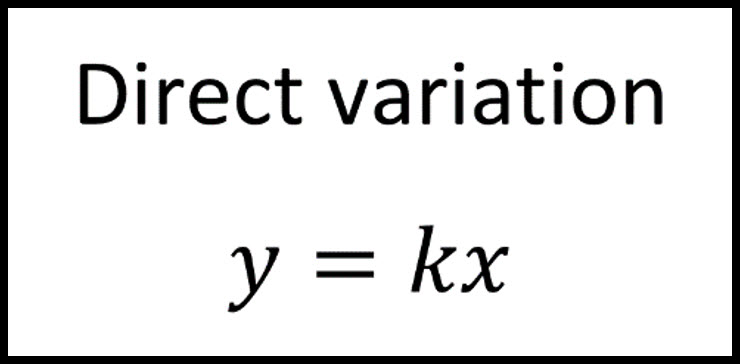
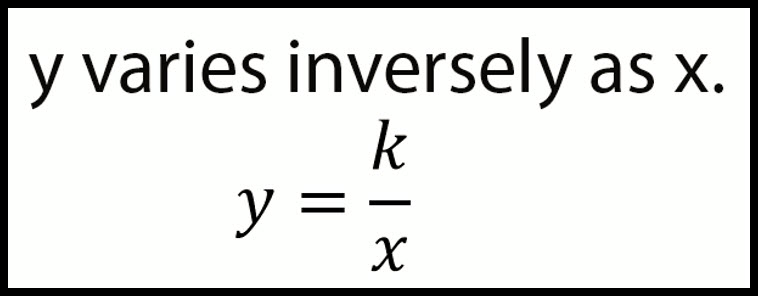
\(\bullet\text{ Direct, Inverse, and Joint Variation}\)
\(\,\,\,\,\,\,\,\,\)
 \(…\)
\(…\)
\(\bullet\text{ Complex Fractions}\)
\(\,\,\,\,\,\,\,\,\displaystyle\frac{\frac{x}{5}+\frac{1}{3}}{\frac{1}{5}-\frac{1}{6}}…\)
\(\bullet\text{ Partial Fraction Decomposition}\)
\(\,\,\,\,\,\,\,\,\displaystyle\frac{8x+10}{x^2+2x}=\displaystyle\frac{5}{x} + \frac{3}{x+2}…\)