

Notes
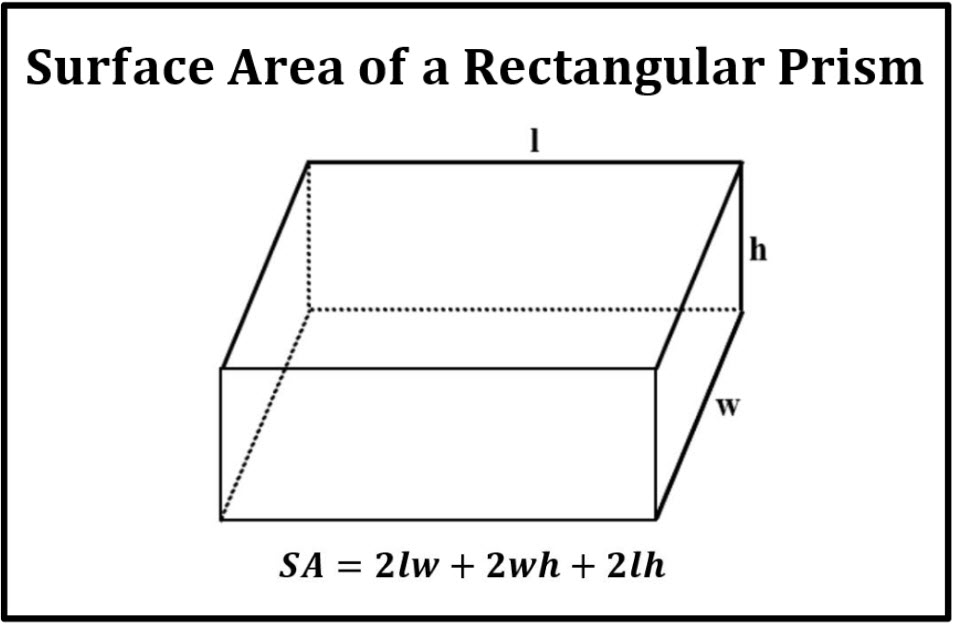
Practice Problems & Videos
\(\textbf{1)}\) Find the Surface Area of the following Rectangular Prism
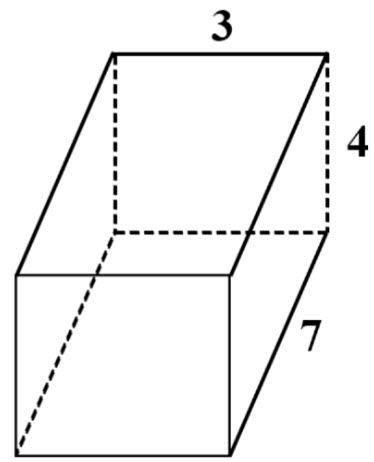
\(\text{The Surface Area is } 122 \text{ square units}\)
\(\,\,\,\,\,\,\text{Surface Area}=2(3)(7)+2(3)(4)+2(4)(7)\)
\(\,\,\,\,\,\,\text{Surface Area}=42+24+56\)
\(\,\,\,\,\,\,\text{Surface Area is } 122 \text{ square units}\)
\(\,\,\,\,\,\,\text{Surface Area}=2(3)(7)+2(3)(4)+2(4)(7)\)
\(\,\,\,\,\,\,\text{Surface Area}=42+24+56\)
\(\,\,\,\,\,\,\text{Surface Area is } 122 \text{ square units}\)
\(\textbf{2)}\) Find the Surface Area of the following Rectangular Prism
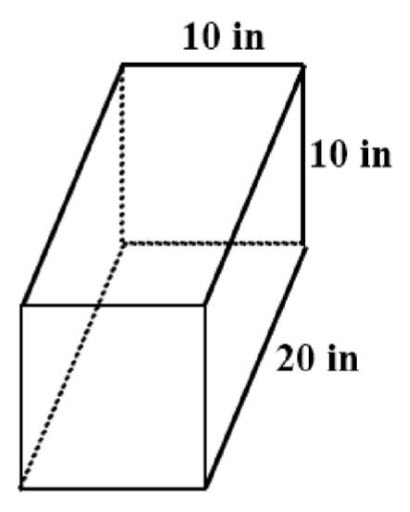
The Surface Area is \( 1000\) square inches
\(\,\,\,\,\,\,\text{Surface Area}=2(10)(10)+4(10)(20)\)
\(\,\,\,\,\,\,\text{Surface Area}=200+800\)
\(\,\,\,\,\,\,\text{Surface Area is } 1000 \text{ square inches}\)
\(\,\,\,\,\,\,\text{Surface Area}=2(10)(10)+4(10)(20)\)
\(\,\,\,\,\,\,\text{Surface Area}=200+800\)
\(\,\,\,\,\,\,\text{Surface Area is } 1000 \text{ square inches}\)
\(\textbf{3)}\) Find the Surface Area of the following Rectangular Prism
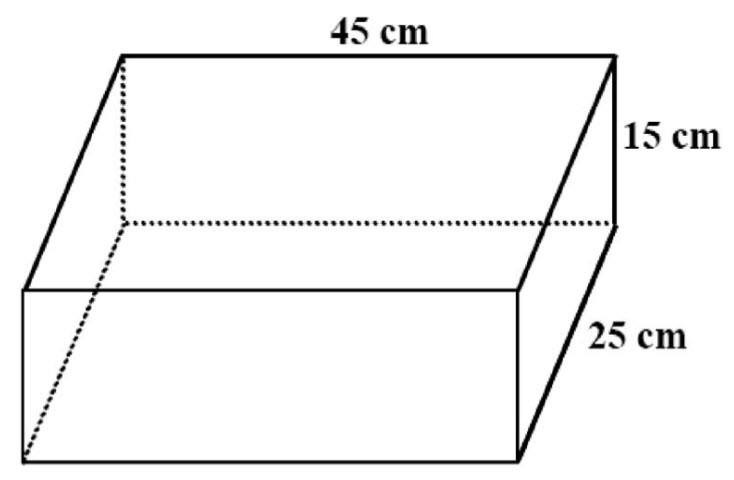
The Surface Area is \( 4{,}350\) square cm
\(\,\,\,\,\,\,\text{Surface Area}=2(45)(15)+2(15)(25)+2(45)(25)\)
\(\,\,\,\,\,\,\text{Surface Area}=1{,}350+750+2{,}250\)
\(\,\,\,\,\,\,\text{Surface Area is } 4{,}350 \text{ square cm}\)
\(\,\,\,\,\,\,\text{Surface Area}=2(45)(15)+2(15)(25)+2(45)(25)\)
\(\,\,\,\,\,\,\text{Surface Area}=1{,}350+750+2{,}250\)
\(\,\,\,\,\,\,\text{Surface Area is } 4{,}350 \text{ square cm}\)
\(\textbf{4)}\) Find the Surface Area of the following Rectangular Prism
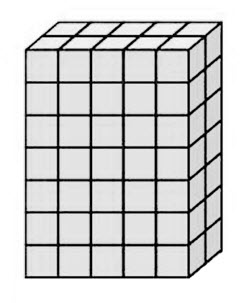
The surface area is \( 118 \) square units
\(\,\,\,\,\,\,\text{Surface Area}=2(5)(2)+2(5)(7)+2(2)(7)\)
\(\,\,\,\,\,\,\text{Surface Area}=20+70+28\)
\(\,\,\,\,\,\,\text{Surface Area is } 118 \text{ square units}\)
\(\,\,\,\,\,\,\text{Surface Area}=2(5)(2)+2(5)(7)+2(2)(7)\)
\(\,\,\,\,\,\,\text{Surface Area}=20+70+28\)
\(\,\,\,\,\,\,\text{Surface Area is } 118 \text{ square units}\)
\(\textbf{5)}\) Find the Surface Area of the following Rectangular Prism
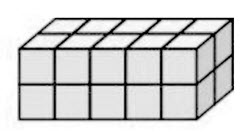
The surface area is \( 48 \) square units
\(\,\,\,\,\,\,\text{Surface Area}=2(2)(5)+2(2)(5)+2(2)(2)\)
\(\,\,\,\,\,\,\text{Surface Area}=20+20+8\)
\(\,\,\,\,\,\,\text{Surface Area is } 48 \text{ square units}\)
\(\,\,\,\,\,\,\text{Surface Area}=2(2)(5)+2(2)(5)+2(2)(2)\)
\(\,\,\,\,\,\,\text{Surface Area}=20+20+8\)
\(\,\,\,\,\,\,\text{Surface Area is } 48 \text{ square units}\)
\(\textbf{6)}\) Find the Surface Area of the following Rectangular Prism
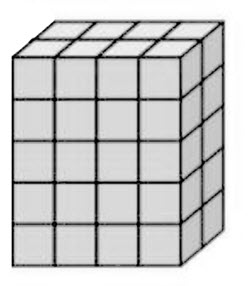
The surface area is \( 76 \) square units
\(\,\,\,\,\,\,\text{Surface Area}=2(4)(5)+2(2)(5)+2(2)(4)\)
\(\,\,\,\,\,\,\text{Surface Area}=40+20+16\)
\(\,\,\,\,\,\,\text{Surface Area is } 76 \text{ square units}\)
\(\,\,\,\,\,\,\text{Surface Area}=2(4)(5)+2(2)(5)+2(2)(4)\)
\(\,\,\,\,\,\,\text{Surface Area}=40+20+16\)
\(\,\,\,\,\,\,\text{Surface Area is } 76 \text{ square units}\)
See Related Pages\(\)
\(\bullet\text{ Geometry Homepage}\)
\(\,\,\,\,\,\,\,\,\text{All the Best Topics…}\)
\(\bullet\text{ Rectangular Prisms- Volume}\)
\(\,\,\,\,\,\,\,\,\)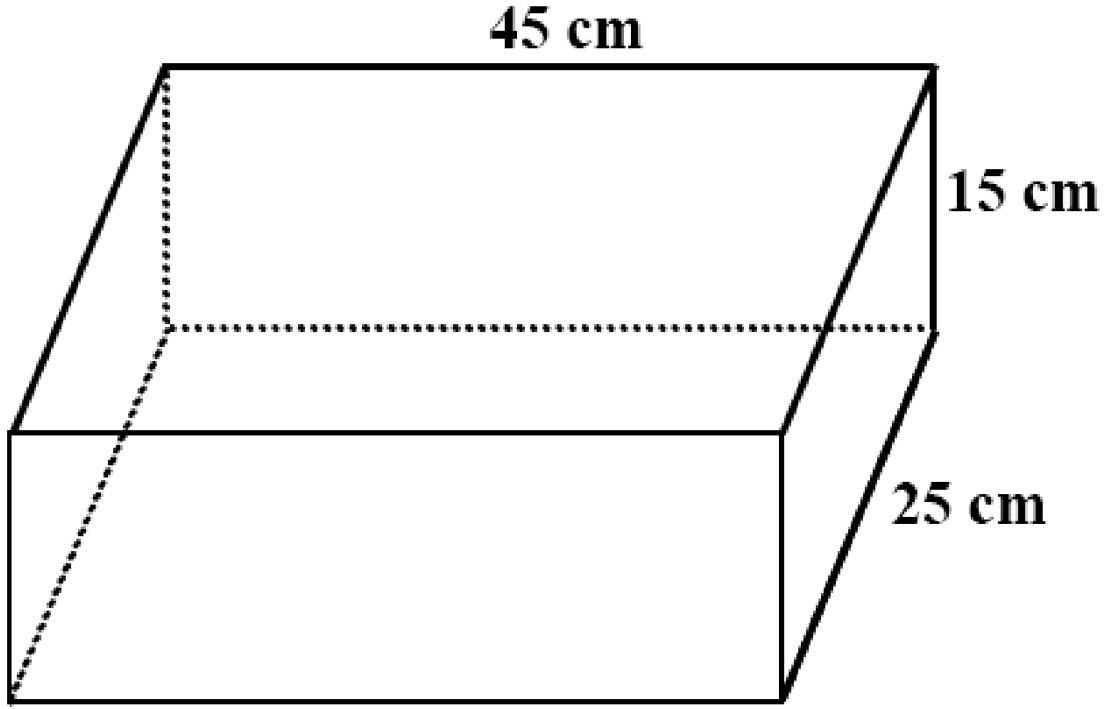 \(V=l \cdot w \cdot h…\)
\(\bullet\text{ Distance Formula 3D}\)
\(\,\,\,\,\,\,\,\,d=\sqrt{(x_2-x_1)^2+(y_2-y_1)^2+(z_2-z_1)^2}…\)
\(\bullet\text{ Diagonal of a Prism}\)
\(\,\,\,\,\,\,\,\,\)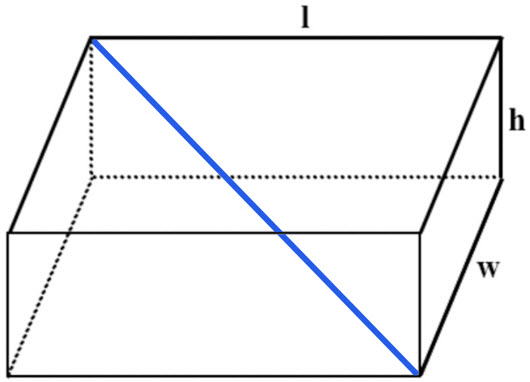 \(d=\sqrt{l^2+w^2+h^2}…\)
\(\bullet\text{ Cylinders- Volume and Surface Area}\)
\(\,\,\,\,\,\,\,\,\)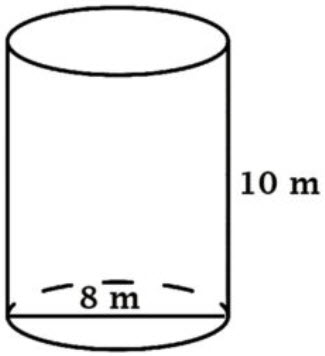 \(V=\pi r^2h\,\,\,SA=2\pi r^2+2 \pi rh…\)
\(\bullet\text{ Pyramids- Volume and Surface Area}\)
\(\,\,\,\,\,\,\,\,\)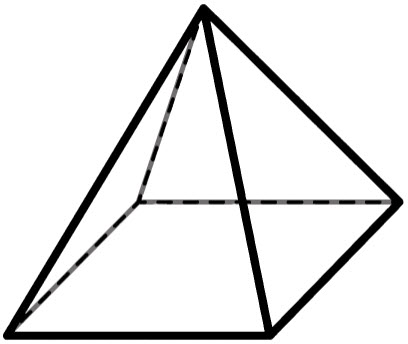 \(V=\frac{1}{3}Bh\,\,\,SA=B+\frac{pl}{2}…\)
\(\bullet\text{ Cones- Volume and Surface Area}\)
\(\,\,\,\,\,\,\,\,\)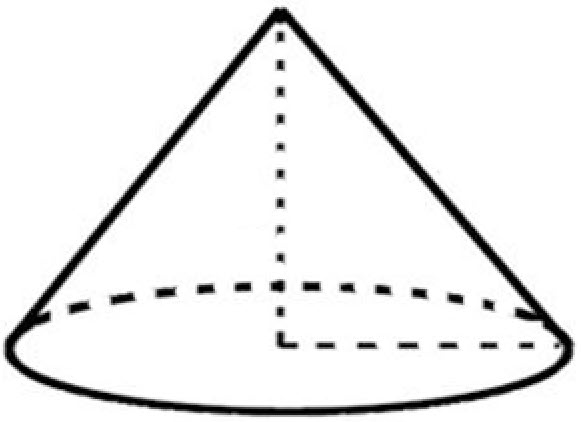 \(V=\frac{1}{3}\pi r^2 h\,\,\,SA=\pi r^2+\pi r l…\)
\(\bullet\text{ Spheres- Volume and Surface Area}\)
\(\,\,\,\,\,\,\,\,\)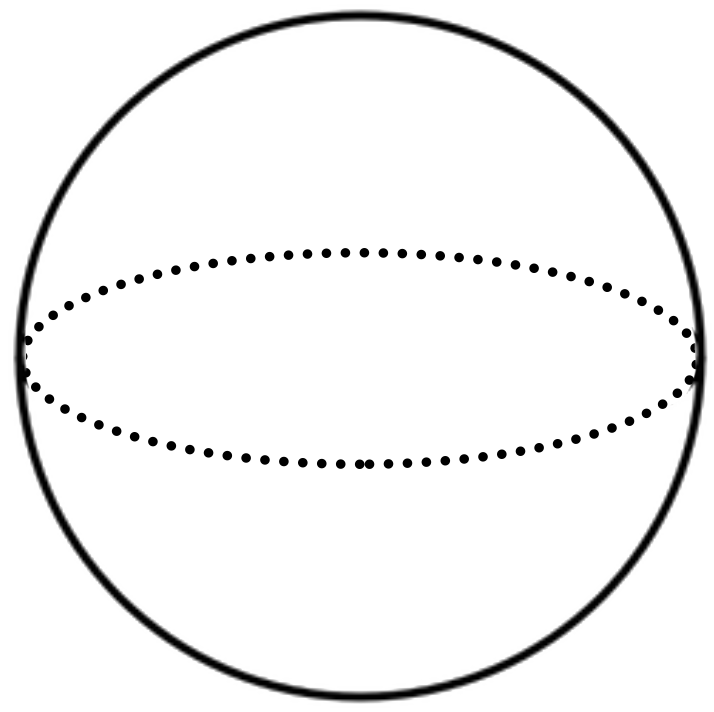 \(V=\frac{4}{3}\pi r^3 \,\,\,SA=4 \pi r^2…\)
\(\bullet\text{ Similar figures}\)
\(\,\,\,\,\,\,\,\,\text{Similarity ratio } a:b, \text{Area ratio } a^2:b^2, \text{Volume ratio } a^3:b^3\)
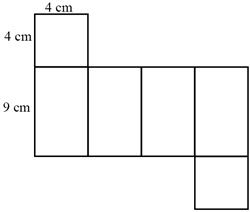
\(\bullet\text{ Nets of Polyhedra}\)
\(\,\,\,\,\,\,\,\,\)
In Summary
Rectangular prisms are a three-dimensional figures with six rectangular faces. A cube is a rectangular prism where all the faces are congruent squares.
You can think of surface area as how much area it would take to paint the entire object. On rectangular prisms, you can find this by adding the areas of the six rectangles that form the figure. If you know the length, width and height of a rectangular prism, you can use the popular formula of Surface Area \(= 2lw+2lh+2wh\).
The volume is the number of 1x1x1 blocks that it would take to fill the inside. For rectangular prisms, you can get this by multiplying the length times the width times the depth.If you know the length, width and height of a rectangular prism, you can use the popular formula of Volume \(=lwh\).