

Notes
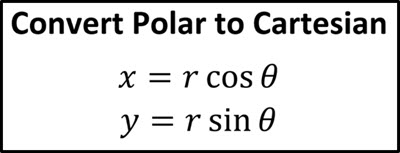
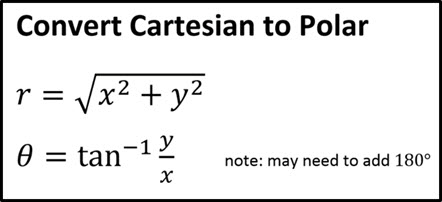
| \({\text{Equations of Lines}}\) | |
| \(\underline{\text{Polar Form}}\) | \(\underline{\text{Cartesian Form}}\) |
|---|---|
| \({\text{Equations of Circles}}\) | |
| \(\underline{\text{Polar Form}}\) | \(\underline{\text{Cartesian Form}}\) |
|---|---|
| \({\text{Equations of Parabolas (Focus on the origin)}}\) | |
| \(\underline{\text{Polar Form}}\) | \(\underline{\text{Cartesian Form}}\) |
|---|---|
Questions & Videos
\(\textbf{1)}\) Convert the point from Polar to Rectangular Coordinates
\((8,60^{\circ})\) The answer is \((4,4\sqrt{3})\)
\(\textbf{2)}\) Convert the point from Polar to Rectangular Coordinates
\((2,180^{\circ})\) The answer is \((-2,0)\)
\(\textbf{3)}\) Convert the point from Rectangular to Polar Coordinates
\((-4,5)\) The answer is \((\sqrt{41},128.7^{\circ})\)
\(\textbf{4)}\) Convert the point from Rectangular to Polar Coordinates
\((0,-3)\) The answer is \((3,270^{\circ})\)
\(\textbf{5)}\) Convert the Polar Equation to Rectangular and identify the graph
\(r=2 \cos \theta\) The answer is \((x-1)^2+y^2=1, \,\,\) Circle
\(\textbf{6)}\) Convert the Polar Equation to Rectangular and identify the graph
\(r=\displaystyle \frac{5}{1-\cos \theta}\) The answer is \(y^2-10x-25=0, \,\,\) Parabola
\(\textbf{7)}\) Convert the Polar Equation to Rectangular and identify the graph
\(r=\displaystyle\frac{3}{3+ \sin \theta}\) The answer is \(9x^2+8y^2+6y=9, \,\,\) Ellipse
\(\textbf{8)}\) Convert the Polar Equation to Rectangular and identify the graph
\(r=5\) The answer is \(x^2+y^2=25, \,\,\) Circle
\(\,\,\,\,\,\, r=5\)
\(\,\,\,\,\,\, \text{Square both sides } r^2 = 5^2\)
\(\,\,\,\,\,\, \text{Use the polar-to-rectangular conversion: } r^2 = x^2 + y^2\)
\(\,\,\,\,\,\, (x^2 + y^2) = 5^2\)
\(\,\,\,\,\,\, x^2 + y^2 = 25\)
\(\,\,\,\,\,\, \text{This is the equation of a circle centered at } (0,0) \text{ with radius } 5\)
\(\,\,\,\,\,\,\)The answer is \(x^2+y^2=25, \,\,\) Circle
\(\,\,\,\,\,\, r=5\)
\(\,\,\,\,\,\, \text{Square both sides } r^2 = 5^2\)
\(\,\,\,\,\,\, \text{Use the polar-to-rectangular conversion: } r^2 = x^2 + y^2\)
\(\,\,\,\,\,\, (x^2 + y^2) = 5^2\)
\(\,\,\,\,\,\, x^2 + y^2 = 25\)
\(\,\,\,\,\,\, \text{This is the equation of a circle centered at } (0,0) \text{ with radius } 5\)
\(\,\,\,\,\,\,\)The answer is \(x^2+y^2=25, \,\,\) Circle
\(\textbf{9)}\) Convert the Polar Equation to Rectangular and identify the graph
\(r=6 \cos \theta\) The answer is \((x-3)^2+y^2=9, \,\,\) Circle
\(\,\,\,\,\,\, r=6 \cos \theta\)
\(\,\,\,\,\,\, \text{Multiply both sides by } r:\)
\(\,\,\,\,\,\, r^2 = 6r \cos \theta\)
\(\,\,\,\,\,\, \text{Use the polar-to-rectangular conversions: } x = r\cos\theta, \quad r^2 = x^2 + y^2\)
\(\,\,\,\,\,\, x^2 + y^2 = 6x\)
\(\,\,\,\,\,\, \text{Rearrange: } x^2 – 6x + y^2 = 0\)
\(\,\,\,\,\,\, \text{Complete the square for } x:\)
\(\,\,\,\,\,\, (x – 3)^2 – 9\)
\(\,\,\,\,\,\, (x – 3)^2 – 9 + y^2 = 0\)
\(\,\,\,\,\,\, (x – 3)^2 + y^2 = 9\)
\(\,\,\,\,\,\, \text{This is the equation of a circle centered at } (3,0) \text{ with radius } 3\)
\(\,\,\,\,\,\,\)The answer is \((x-3)^2+y^2=9, \,\,\) Circle
\(\,\,\,\,\,\, r=6 \cos \theta\)
\(\,\,\,\,\,\, \text{Multiply both sides by } r:\)
\(\,\,\,\,\,\, r^2 = 6r \cos \theta\)
\(\,\,\,\,\,\, \text{Use the polar-to-rectangular conversions: } x = r\cos\theta, \quad r^2 = x^2 + y^2\)
\(\,\,\,\,\,\, x^2 + y^2 = 6x\)
\(\,\,\,\,\,\, \text{Rearrange: } x^2 – 6x + y^2 = 0\)
\(\,\,\,\,\,\, \text{Complete the square for } x:\)
\(\,\,\,\,\,\, (x – 3)^2 – 9\)
\(\,\,\,\,\,\, (x – 3)^2 – 9 + y^2 = 0\)
\(\,\,\,\,\,\, (x – 3)^2 + y^2 = 9\)
\(\,\,\,\,\,\, \text{This is the equation of a circle centered at } (3,0) \text{ with radius } 3\)
\(\,\,\,\,\,\,\)The answer is \((x-3)^2+y^2=9, \,\,\) Circle
\(\textbf{10)}\) Convert the Polar Equation to Rectangular and identify the graph
\(r=-12 \sin \theta\) The answer is \(x^2+(y+6)^2=36, \,\,\) Circle
\(\,\,\,\,\,\, r=-12 \sin \theta\)
\(\,\,\,\,\,\, \text{Multiply both sides by } r:\)
\(\,\,\,\,\,\, r^2 = -12r \sin \theta\)
\(\,\,\,\,\,\, \text{Use the polar-to-rectangular conversions: } y = r\sin\theta, \quad r^2 = x^2 + y^2\)
\(\,\,\,\,\,\, x^2 + y^2 = -12y\)
\(\,\,\,\,\,\, \text{Rearrange: } x^2 + y^2 + 12y = 0\)
\(\,\,\,\,\,\, \text{Complete the square for } y:\)
\(\,\,\,\,\,\, (y + 6)^2 – 36\)
\(\,\,\,\,\,\, x^2 + (y + 6)^2 – 36 = 0\)
\(\,\,\,\,\,\, x^2 + (y + 6)^2 = 36\)
\(\,\,\,\,\,\, \text{This is the equation of a circle centered at } (0,-6) \text{ with radius } 6\)
\(\,\,\,\,\,\,\)The answer is \(x^2+(y+6)^2=36, \,\,\) Circle
\(\,\,\,\,\,\, r=-12 \sin \theta\)
\(\,\,\,\,\,\, \text{Multiply both sides by } r:\)
\(\,\,\,\,\,\, r^2 = -12r \sin \theta\)
\(\,\,\,\,\,\, \text{Use the polar-to-rectangular conversions: } y = r\sin\theta, \quad r^2 = x^2 + y^2\)
\(\,\,\,\,\,\, x^2 + y^2 = -12y\)
\(\,\,\,\,\,\, \text{Rearrange: } x^2 + y^2 + 12y = 0\)
\(\,\,\,\,\,\, \text{Complete the square for } y:\)
\(\,\,\,\,\,\, (y + 6)^2 – 36\)
\(\,\,\,\,\,\, x^2 + (y + 6)^2 – 36 = 0\)
\(\,\,\,\,\,\, x^2 + (y + 6)^2 = 36\)
\(\,\,\,\,\,\, \text{This is the equation of a circle centered at } (0,-6) \text{ with radius } 6\)
\(\,\,\,\,\,\,\)The answer is \(x^2+(y+6)^2=36, \,\,\) Circle
\(\textbf{11)}\) Convert the Polar Equation to Rectangular and identify the graph
\(r=6 \cos \theta – 8 \sin \theta\) The answer is \((x-3)^2+(y+4)^2=25, \,\,\) Circle
\(\,\,\,\,\,\, r=6 \cos \theta – 8 \sin \theta\)
\(\,\,\,\,\,\, \text{Multiply both sides by } r:\)
\(\,\,\,\,\,\, r^2 = 6r \cos \theta – 8r \sin \theta\)
\(\,\,\,\,\,\, \text{Use the polar-to-rectangular conversions: } x = r\cos\theta, \, y = r\sin\theta\)
\(\,\,\,\,\,\, r^2 = x^2 + y^2, \quad r\cos\theta = x, \quad r\sin\theta = y\)
\(\,\,\,\,\,\, x^2 + y^2 = 6x – 8y\)
\(\,\,\,\,\,\, \text{Rearrange: } x^2 – 6x + y^2 + 8y = 0\)
\(\,\,\,\,\,\, \text{Complete the square for } x:\)
\(\,\,\,\,\,\, (x – 3)^2 – 9\)
\(\,\,\,\,\,\, \text{Complete the square for } y:\)
\(\,\,\,\,\,\, (y + 4)^2 – 16\)
\(\,\,\,\,\,\, (x – 3)^2 – 9 + (y + 4)^2 – 16 = 0\)
\(\,\,\,\,\,\, (x – 3)^2 + (y + 4)^2 = 25\)
\(\,\,\,\,\,\, \text{This is the equation of a circle centered at } (3, -4) \text{ with radius } 5\)
\(\,\,\,\,\,\,\)The answer is \((x-3)^2+(y+4)^2=25, \,\,\) Circle
\(\,\,\,\,\,\, r=6 \cos \theta – 8 \sin \theta\)
\(\,\,\,\,\,\, \text{Multiply both sides by } r:\)
\(\,\,\,\,\,\, r^2 = 6r \cos \theta – 8r \sin \theta\)
\(\,\,\,\,\,\, \text{Use the polar-to-rectangular conversions: } x = r\cos\theta, \, y = r\sin\theta\)
\(\,\,\,\,\,\, r^2 = x^2 + y^2, \quad r\cos\theta = x, \quad r\sin\theta = y\)
\(\,\,\,\,\,\, x^2 + y^2 = 6x – 8y\)
\(\,\,\,\,\,\, \text{Rearrange: } x^2 – 6x + y^2 + 8y = 0\)
\(\,\,\,\,\,\, \text{Complete the square for } x:\)
\(\,\,\,\,\,\, (x – 3)^2 – 9\)
\(\,\,\,\,\,\, \text{Complete the square for } y:\)
\(\,\,\,\,\,\, (y + 4)^2 – 16\)
\(\,\,\,\,\,\, (x – 3)^2 – 9 + (y + 4)^2 – 16 = 0\)
\(\,\,\,\,\,\, (x – 3)^2 + (y + 4)^2 = 25\)
\(\,\,\,\,\,\, \text{This is the equation of a circle centered at } (3, -4) \text{ with radius } 5\)
\(\,\,\,\,\,\,\)The answer is \((x-3)^2+(y+4)^2=25, \,\,\) Circle
\(\textbf{12)}\) Convert the Polar Equation to Rectangular and identify the graph
\(\theta=\frac{\pi}{4}\) The answer is \(y=x, \,\,\) Line
\(\textbf{13)}\) Convert the Polar Equation to Rectangular and identify the graph
\(\theta=-\frac{\pi}{4}\) The answer is \(y=-x, \,\,\) Line
\(\textbf{14)}\) Convert the Polar Equation to Rectangular and identify the graph
\(r \cos \theta=2\) The answer is \(x=2, \,\,\) Vertical Line
\(\textbf{15)}\) Convert the Polar Equation to Rectangular and identify the graph
\(r \sin \theta=-3\) The answer is \(y=-3, \,\,\) Horizontal Line
\(\textbf{16)}\) Convert the Polar Equation to Rectangular and identify the graph
\(r=\frac{4}{1+ \sin \theta}\) The answer is \(y=-\frac{1}{8}x^2+2, \,\,\) Parabola
See Related Pages\(\)
\(\bullet\text{ Displacement Vectors}\)
\(\,\,\,\,\,\,\,\,(x_2-x_1)\vec{i}+(y_2-y_1)\vec{j}…\)
\(\bullet\text{ Magnitude, Direction, and Unit Vectors}\)
\(\,\,\,\,\,\,\,\,|\vec{u}|=\sqrt{a^2+b^2}…\)
\(\bullet\text{ Dot Product}\)
\(\,\,\,\,\,\,\,\,a \cdot b=x_1 x_2+ y_1 y_2…\)
\(\bullet\text{ Parallel and Perpendicular Vectors}\)
\(\,\,\,\,\,\,\,\,⟨8,2⟩ \text{ and } ⟨−4,−1⟩…\)
\(\bullet\text{ Scalar and Vector Projections}\)
\(\,\,\,\,\,\,\,\,\displaystyle\frac{a \cdot b}{|b|^2} \, \vec{b}…\)
\(\bullet\text{ Cross Product}\)
\(\,\,\,\,\,\,\,\,\)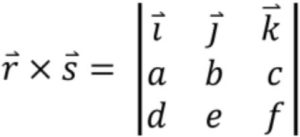 \(…\)
\(…\)
\(\bullet\text{ Equation of a Plane}\)
\(\,\,\,\,\,\,\,\,Ax+By+Cz=D…\)