
To determine whether a point lies on a plane, substitute the point’s coordinates into the plane equation. If the equation is true, the point lies on the plane; if the equation is false, the point does not lie on the plane. These problems give practice checking points in three-dimensional space using equations of planes.
Notes
Practice Problems
\(\textbf{1)}\) Does the point \((4,2,7)\) lie on the plane \(2x+3y-2z=0\)? Yes, the point does lie on the plane.
\(\,\,\,\,\,\,2x+3y-2z=0\)
\(\,\,\,\,\,\,2(4)+3(2)-2(7)=0\)
\(\,\,\,\,\,\,8+6-14=0\)
\(\,\,\,\,\,\,0=0\)
\(\,\,\,\,\,\,\text{Yes, the point does lie on the plane.}\)
\(\,\,\,\,\,\,2x+3y-2z=0\)
\(\,\,\,\,\,\,2(4)+3(2)-2(7)=0\)
\(\,\,\,\,\,\,8+6-14=0\)
\(\,\,\,\,\,\,0=0\)
\(\,\,\,\,\,\,\text{Yes, the point does lie on the plane.}\)
\(\textbf{2)}\) Does the point \((1,2,3)\) lie on the plane \(x-2y+z=0\)? Yes, the point does lie on the plane.
\(\,\,\,\,\,\,x-2y+z=0\)
\(\,\,\,\,\,\,(1)-2(2)+(3)=0\)
\(\,\,\,\,\,\,1-4+3=0\)
\(\,\,\,\,\,\,0=0\)
\(\,\,\,\,\,\,\text{Yes, the point does lie on the plane.}\)
\(\,\,\,\,\,\,x-2y+z=0\)
\(\,\,\,\,\,\,(1)-2(2)+(3)=0\)
\(\,\,\,\,\,\,1-4+3=0\)
\(\,\,\,\,\,\,0=0\)
\(\,\,\,\,\,\,\text{Yes, the point does lie on the plane.}\)
\(\textbf{3)}\) Does the point \((0,3,1)\) lie on the plane \(5x+2y=0\)? No, the point does not lie on the plane.
\(\,\,\,\,\,\,5x+2y=0\)
\(\,\,\,\,\,\,5(0)+2(3)=0\)
\(\,\,\,\,\,\,0+6=0\)
\(\,\,\,\,\,\,6\ne0\)
\(\,\,\,\,\,\,\text{No, the point does not lie on the plane.}\)
\(\,\,\,\,\,\,5x+2y=0\)
\(\,\,\,\,\,\,5(0)+2(3)=0\)
\(\,\,\,\,\,\,0+6=0\)
\(\,\,\,\,\,\,6\ne0\)
\(\,\,\,\,\,\,\text{No, the point does not lie on the plane.}\)
\(\textbf{4)}\) Does the point \((5,-4,-8)\) lie on the plane \(x-y+2z=0\)? No, the point does not lie on the plane.
\(\,\,\,\,\,\,x-y+2z=0\)
\(\,\,\,\,\,\,(5)-(-4)+2(-8)=0\)
\(\,\,\,\,\,\,5+4-16=0\)
\(\,\,\,\,\,\,-7\ne0\)
\(\,\,\,\,\,\,\text{No, the point does not lie on the plane.}\)
\(\,\,\,\,\,\,x-y+2z=0\)
\(\,\,\,\,\,\,(5)-(-4)+2(-8)=0\)
\(\,\,\,\,\,\,5+4-16=0\)
\(\,\,\,\,\,\,-7\ne0\)
\(\,\,\,\,\,\,\text{No, the point does not lie on the plane.}\)
\(\textbf{5)}\) Does the point \((2,1,3)\) lie on the plane \(x+y+z=6\)? Yes, the point does lie on the plane.
\(\,\,\,\,\,\,x+y+z=6\)
\(\,\,\,\,\,\,2+1+3=6\)
\(\,\,\,\,\,\,6=6\)
\(\,\,\,\,\,\,\text{Yes, the point does lie on the plane.}\)
\(\,\,\,\,\,\,x+y+z=6\)
\(\,\,\,\,\,\,2+1+3=6\)
\(\,\,\,\,\,\,6=6\)
\(\,\,\,\,\,\,\text{Yes, the point does lie on the plane.}\)
\(\textbf{6)}\) Does the point \((1,1,1)\) lie on the plane \(x+2y+3z=12\)? No, the point does not lie on the plane.
\(\,\,\,\,\,\,x+2y+3z=12\)
\(\,\,\,\,\,\,1+2(1)+3(1)=12\)
\(\,\,\,\,\,\,1+2+3=12\)
\(\,\,\,\,\,\,6\ne12\)
\(\,\,\,\,\,\,\text{No, the point does not lie on the plane.}\)
\(\,\,\,\,\,\,x+2y+3z=12\)
\(\,\,\,\,\,\,1+2(1)+3(1)=12\)
\(\,\,\,\,\,\,1+2+3=12\)
\(\,\,\,\,\,\,6\ne12\)
\(\,\,\,\,\,\,\text{No, the point does not lie on the plane.}\)
\(\textbf{7)}\) Does the point \((3,0,-1)\) lie on the plane \(2x-y+3z=3\)? Yes, the point does lie on the plane.
\(\,\,\,\,\,\,2x-y+3z=3\)
\(\,\,\,\,\,\,2(3)-0+3(-1)=3\)
\(\,\,\,\,\,\,6-3=3\)
\(\,\,\,\,\,\,3=3\)
\(\,\,\,\,\,\,\text{Yes, the point does lie on the plane.}\)
\(\,\,\,\,\,\,2x-y+3z=3\)
\(\,\,\,\,\,\,2(3)-0+3(-1)=3\)
\(\,\,\,\,\,\,6-3=3\)
\(\,\,\,\,\,\,3=3\)
\(\,\,\,\,\,\,\text{Yes, the point does lie on the plane.}\)
\(\textbf{8)}\) Does the point \((4,0,2)\) lie on the plane \(x-3z=2\)? No, the point does not lie on the plane.
\(\,\,\,\,\,\,x-3z=2\)
\(\,\,\,\,\,\,4-3(2)=2\)
\(\,\,\,\,\,\,4-6=2\)
\(\,\,\,\,\,\,-2\ne2\)
\(\,\,\,\,\,\,\text{No, the point does not lie on the plane.}\)
\(\,\,\,\,\,\,x-3z=2\)
\(\,\,\,\,\,\,4-3(2)=2\)
\(\,\,\,\,\,\,4-6=2\)
\(\,\,\,\,\,\,-2\ne2\)
\(\,\,\,\,\,\,\text{No, the point does not lie on the plane.}\)
\(\textbf{9)}\) Does the point \((0,5,-2)\) lie on the plane \(4x-y+z=-7\)? Yes, the point does lie on the plane.
\(\,\,\,\,\,\,4x-y+z=-7\)
\(\,\,\,\,\,\,4(0)-5+(-2)=-7\)
\(\,\,\,\,\,\,-7=-7\)
\(\,\,\,\,\,\,\text{Yes, the point does lie on the plane.}\)
\(\,\,\,\,\,\,4x-y+z=-7\)
\(\,\,\,\,\,\,4(0)-5+(-2)=-7\)
\(\,\,\,\,\,\,-7=-7\)
\(\,\,\,\,\,\,\text{Yes, the point does lie on the plane.}\)
\(\textbf{10)}\) Does the point \((-1,4,2)\) lie on the plane \(3x+y-z=5\)? No, the point does not lie on the plane.
\(\,\,\,\,\,\,3x+y-z=5\)
\(\,\,\,\,\,\,3(-1)+4-2=5\)
\(\,\,\,\,\,\,-3+4-2=5\)
\(\,\,\,\,\,\,-1\ne5\)
\(\,\,\,\,\,\,\text{No, the point does not lie on the plane.}\)
\(\,\,\,\,\,\,3x+y-z=5\)
\(\,\,\,\,\,\,3(-1)+4-2=5\)
\(\,\,\,\,\,\,-3+4-2=5\)
\(\,\,\,\,\,\,-1\ne5\)
\(\,\,\,\,\,\,\text{No, the point does not lie on the plane.}\)
\(\textbf{11)}\) Does the point \((6,0,0)\) lie on the plane \(x+y+z=6\)? Yes, the point does lie on the plane.
\(\,\,\,\,\,\,x+y+z=6\)
\(\,\,\,\,\,\,6+0+0=6\)
\(\,\,\,\,\,\,6=6\)
\(\,\,\,\,\,\,\text{Yes, the point does lie on the plane.}\)
\(\,\,\,\,\,\,x+y+z=6\)
\(\,\,\,\,\,\,6+0+0=6\)
\(\,\,\,\,\,\,6=6\)
\(\,\,\,\,\,\,\text{Yes, the point does lie on the plane.}\)
\(\textbf{12)}\) Does the point \((0,0,4)\) lie on the plane \(x+2y+3z=12\)? Yes, the point does lie on the plane.
\(\,\,\,\,\,\,x+2y+3z=12\)
\(\,\,\,\,\,\,0+2(0)+3(4)=12\)
\(\,\,\,\,\,\,12=12\)
\(\,\,\,\,\,\,\text{Yes, the point does lie on the plane.}\)
\(\,\,\,\,\,\,x+2y+3z=12\)
\(\,\,\,\,\,\,0+2(0)+3(4)=12\)
\(\,\,\,\,\,\,12=12\)
\(\,\,\,\,\,\,\text{Yes, the point does lie on the plane.}\)
\(\textbf{13)}\) Does the point \((2,2,5)\) lie on the plane \(x+y=4\)? Yes, the point does lie on the plane.
\(\,\,\,\,\,\,x+y=4\)
\(\,\,\,\,\,\,2+2=4\)
\(\,\,\,\,\,\,4=4\)
\(\,\,\,\,\,\,\text{Yes, the point does lie on the plane.}\)
\(\,\,\,\,\,\,x+y=4\)
\(\,\,\,\,\,\,2+2=4\)
\(\,\,\,\,\,\,4=4\)
\(\,\,\,\,\,\,\text{Yes, the point does lie on the plane.}\)
\(\textbf{14)}\) Does the point \((3,1,5)\) lie on the plane \(x+y-z=0\)? No, the point does not lie on the plane.
\(\,\,\,\,\,\,x+y-z=0\)
\(\,\,\,\,\,\,3+1-5=0\)
\(\,\,\,\,\,\,-1\ne0\)
\(\,\,\,\,\,\,\text{No, the point does not lie on the plane.}\)
\(\,\,\,\,\,\,x+y-z=0\)
\(\,\,\,\,\,\,3+1-5=0\)
\(\,\,\,\,\,\,-1\ne0\)
\(\,\,\,\,\,\,\text{No, the point does not lie on the plane.}\)
\(\textbf{15)}\) Does the point \((0,3,1)\) lie on the plane \(2x+3y+z=10\)? Yes, the point does lie on the plane.
\(\,\,\,\,\,\,2x+3y+z=10\)
\(\,\,\,\,\,\,2(0)+3(3)+1=10\)
\(\,\,\,\,\,\,0+9+1=10\)
\(\,\,\,\,\,\,10=10\)
\(\,\,\,\,\,\,\text{Yes, the point does lie on the plane.}\)
\(\,\,\,\,\,\,2x+3y+z=10\)
\(\,\,\,\,\,\,2(0)+3(3)+1=10\)
\(\,\,\,\,\,\,0+9+1=10\)
\(\,\,\,\,\,\,10=10\)
\(\,\,\,\,\,\,\text{Yes, the point does lie on the plane.}\)
\(\textbf{16)}\) Does the point \((8,0,2)\) lie on the plane \(x-3z=2\)? Yes, the point does lie on the plane.
\(\,\,\,\,\,\,x-3z=2\)
\(\,\,\,\,\,\,8-3(2)=2\)
\(\,\,\,\,\,\,8-6=2\)
\(\,\,\,\,\,\,2=2\)
\(\,\,\,\,\,\,\text{Yes, the point does lie on the plane.}\)
\(\,\,\,\,\,\,x-3z=2\)
\(\,\,\,\,\,\,8-3(2)=2\)
\(\,\,\,\,\,\,8-6=2\)
\(\,\,\,\,\,\,2=2\)
\(\,\,\,\,\,\,\text{Yes, the point does lie on the plane.}\)
\(\textbf{17)}\) Does the point \((0,0,0)\) lie on the plane \(x-y-2z=-1\)? No, the point does not lie on the plane.
\(\,\,\,\,\,\,x-y-2z=-1\)
\(\,\,\,\,\,\,0-0-2(0)=-1\)
\(\,\,\,\,\,\,0\ne-1\)
\(\,\,\,\,\,\,\text{No, the point does not lie on the plane.}\)
\(\,\,\,\,\,\,x-y-2z=-1\)
\(\,\,\,\,\,\,0-0-2(0)=-1\)
\(\,\,\,\,\,\,0\ne-1\)
\(\,\,\,\,\,\,\text{No, the point does not lie on the plane.}\)
\(\textbf{18)}\) Does the point \((4,5,-1)\) lie on the plane \(x+z=3\)? Yes, the point does lie on the plane.
\(\,\,\,\,\,\,x+z=3\)
\(\,\,\,\,\,\,4+(-1)=3\)
\(\,\,\,\,\,\,3=3\)
\(\,\,\,\,\,\,\text{Yes, the point does lie on the plane.}\)
\(\,\,\,\,\,\,x+z=3\)
\(\,\,\,\,\,\,4+(-1)=3\)
\(\,\,\,\,\,\,3=3\)
\(\,\,\,\,\,\,\text{Yes, the point does lie on the plane.}\)
\(\textbf{19)}\) Does the point \((2,9,-1)\) lie on the plane \(4x-y+z=-2\)? Yes, the point does lie on the plane.
\(\,\,\,\,\,\,4x-y+z=-2\)
\(\,\,\,\,\,\,4(2)-9+(-1)=-2\)
\(\,\,\,\,\,\,8-9-1=-2\)
\(\,\,\,\,\,\,-2=-2\)
\(\,\,\,\,\,\,\text{Yes, the point does lie on the plane.}\)
\(\,\,\,\,\,\,4x-y+z=-2\)
\(\,\,\,\,\,\,4(2)-9+(-1)=-2\)
\(\,\,\,\,\,\,8-9-1=-2\)
\(\,\,\,\,\,\,-2=-2\)
\(\,\,\,\,\,\,\text{Yes, the point does lie on the plane.}\)
\(\textbf{20)}\) Does the point \((-2,1,4)\) lie on the plane \(3x-2y+z=0\)? No, the point does not lie on the plane.
\(\,\,\,\,\,\,3x-2y+z=0\)
\(\,\,\,\,\,\,3(-2)-2(1)+4=0\)
\(\,\,\,\,\,\,-6-2+4=0\)
\(\,\,\,\,\,\,-4\ne0\)
\(\,\,\,\,\,\,\text{No, the point does not lie on the plane.}\)
\(\,\,\,\,\,\,3x-2y+z=0\)
\(\,\,\,\,\,\,3(-2)-2(1)+4=0\)
\(\,\,\,\,\,\,-6-2+4=0\)
\(\,\,\,\,\,\,-4\ne0\)
\(\,\,\,\,\,\,\text{No, the point does not lie on the plane.}\)
See Related Pages\(\)
\(\bullet\text{ Displacement Vectors}\)
\(\,\,\,\,\,\,\,\,(x_2-x_1)\vec{i}+(y_2-y_1)\vec{j}…\)
\(\bullet\text{ Magnitude, Direction, and Unit Vectors}\)
\(\,\,\,\,\,\,\,\,|\vec{u}|=\sqrt{a^2+b^2}…\)
\(\bullet\text{ Dot Product}\)
\(\,\,\,\,\,\,\,\,a \cdot b=x_1 x_2+ y_1 y_2…\)
\(\bullet\text{ Parallel and Perpendicular Vectors}\)
\(\,\,\,\,\,\,\,\,⟨8,2⟩ \text{ and } ⟨−4,−1⟩…\)
\(\bullet\text{ Scalar and Vector Projections}\)
\(\,\,\,\,\,\,\,\,\displaystyle\frac{a \cdot b}{|b|^2} \, \vec{b}…\)
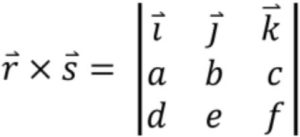
\(\bullet\text{ Cross Product}\)
\(\,\,\,\,\,\,\,\,\) \(…\)
\(…\)
\(\bullet\text{ Equation of a Plane}\)
\(\,\,\,\,\,\,\,\,Ax+By+Cz=D…\)