

Questions & Solutions
\(\textbf{1)}\) What is the complex conjugate of \(3i+4\)
The answer is \( 3i-4 \)
\(\textbf{2)}\) What is the complex conjugate of \(i-5\)
The answer is \( i+5 \)
\(\textbf{3)}\) What is the complex conjugate of \(6i-2\)
The answer is \( 6i+2 \)
Use the complex conjugate of the denominator to simplify
\(\textbf{4)}\) Simplify \( \displaystyle\frac{2i}{3+4i} \) The answer is \( \frac{6}{25}i+\frac{8}{25} \)
\(\textbf{5)}\) Simplify \( \displaystyle\frac{6+i}{3+2i} \) The answer is \( \frac{20}{13}-\frac{9}{13}i \)
\(\textbf{6)}\) Simplify \( \displaystyle\frac{3-i}{5+3i} \) The answer is \( \frac{6}{17}-\frac{7}{17}i \)
\(\,\,\,\,\,\,\displaystyle\frac{3-i}{5+3i} \cdot \frac{5-3i}{5-3i}\)
\(\,\,\,\,\,\,\displaystyle\frac{15-9i-5i+3i^2}{25-15i+15i-9i^2}\)
\(\,\,\,\,\,\,\displaystyle\frac{15-14i+3i^2}{25-9i^2}\)
\(\,\,\,\,\,\,\displaystyle\frac{15-14i+3(-1)}{25-9(-1)}\)
\(\,\,\,\,\,\,\displaystyle\frac{15-14i-3}{25+9}\)
\(\,\,\,\,\,\,\displaystyle\frac{12-14i}{34}\)
\(\,\,\,\,\,\,\)The answer is \( \frac{6}{17}-\frac{7}{17}i \)
\(\,\,\,\,\,\,\displaystyle\frac{3-i}{5+3i} \cdot \frac{5-3i}{5-3i}\)
\(\,\,\,\,\,\,\displaystyle\frac{15-9i-5i+3i^2}{25-15i+15i-9i^2}\)
\(\,\,\,\,\,\,\displaystyle\frac{15-14i+3i^2}{25-9i^2}\)
\(\,\,\,\,\,\,\displaystyle\frac{15-14i+3(-1)}{25-9(-1)}\)
\(\,\,\,\,\,\,\displaystyle\frac{15-14i-3}{25+9}\)
\(\,\,\,\,\,\,\displaystyle\frac{12-14i}{34}\)
\(\,\,\,\,\,\,\)The answer is \( \frac{6}{17}-\frac{7}{17}i \)
\(\textbf{7)}\) Simplify \( \displaystyle\frac{3-2i}{3-i} \) The answer is \( \frac{11}{10}-\frac{3}{10}i \)
\( \displaystyle\frac{3-2i}{3-i} \)
\( \displaystyle\frac{3-2i}{3-i} \cdot \frac{3+i}{3+i} \)
\( \displaystyle\frac{(3-2i)(3+i)}{(3-i)(3+i)} \)
\( \displaystyle\frac{9+3i-6i-2i^2}{9+3i-3i-i^2} \)
\( \displaystyle\frac{9+3i-6i-2(-1)}{9+3i-3i-(-1)} \)
\( \displaystyle\frac{9+3i-6i+2}{9+1} \)
\( \displaystyle\frac{11-3i}{10} \)
\( \displaystyle\frac{11}{10}-\frac{3}{10}i \)
\( \displaystyle\frac{3-2i}{3-i} \)
\( \displaystyle\frac{3-2i}{3-i} \cdot \frac{3+i}{3+i} \)
\( \displaystyle\frac{(3-2i)(3+i)}{(3-i)(3+i)} \)
\( \displaystyle\frac{9+3i-6i-2i^2}{9+3i-3i-i^2} \)
\( \displaystyle\frac{9+3i-6i-2(-1)}{9+3i-3i-(-1)} \)
\( \displaystyle\frac{9+3i-6i+2}{9+1} \)
\( \displaystyle\frac{11-3i}{10} \)
\( \displaystyle\frac{11}{10}-\frac{3}{10}i \)
\(\textbf{8)}\) Simplify \( \displaystyle\frac{i}{9-2i} \) The answer is \( -\frac{2}{85}+\frac{9}{85}i \)
\( \displaystyle\frac{i}{9-2i} \)
\( \displaystyle\frac{i}{9-2i} \cdot \frac{9+2i}{9+2i} \)
\( \displaystyle\frac{i(9+2i)}{(9-2i)(9+2i)} \)
\( \displaystyle\frac{9i + 2i^2}{81 – (2i)^2} \)
\( \displaystyle\frac{9i + 2(-1)}{81 – 4(-1)} \)
\( \displaystyle\frac{9i – 2}{81 + 4} \)
\( \displaystyle\frac{-2 + 9i}{85} \)
\( \displaystyle-\frac{2}{85}+\frac{9}{85}i \)
\( \displaystyle\frac{i}{9-2i} \)
\( \displaystyle\frac{i}{9-2i} \cdot \frac{9+2i}{9+2i} \)
\( \displaystyle\frac{i(9+2i)}{(9-2i)(9+2i)} \)
\( \displaystyle\frac{9i + 2i^2}{81 – (2i)^2} \)
\( \displaystyle\frac{9i + 2(-1)}{81 – 4(-1)} \)
\( \displaystyle\frac{9i – 2}{81 + 4} \)
\( \displaystyle\frac{-2 + 9i}{85} \)
\( \displaystyle-\frac{2}{85}+\frac{9}{85}i \)
See Related Pages\(\)
\(\bullet\text{ Complex Numbers Calculator (Symbolab.com)}\)
\(\)
\(\bullet\text{ Adding and Subtracting Polynomials}\)
\(\,\,\,\,\,\,\,\,(4d+7)−(2d−5)…\)
\(\bullet\text{ Multiplying Polynomials}\)
\(\,\,\,\,\,\,\,\,(x+2)(x^2+3x−5)…\)
\(\bullet\text{ Dividing Polynomials}\)
\(\,\,\,\,\,\,\,\,(x^3-8)÷(x-2)…\)
\(\bullet\text{ Dividing Polynomials (Synthetic Division)}\)
\(\,\,\,\,\,\,\,\,(x^3-8)÷(x-2)…\)
\(\bullet\text{ Synthetic Substitution}\)
\(\,\,\,\,\,\,\,\,f(x)=4x^4−3x^2+8x−2…\)
\(\bullet\text{ End Behavior}\)
\(\,\,\,\,\,\,\,\, \text{As } x\rightarrow \infty, \quad f(x)\rightarrow \infty \)
\(\,\,\,\,\,\,\,\, \text{As } x\rightarrow -\infty, \quad f(x)\rightarrow \infty… \)
\(\bullet\text{ Completing the Square}\)
\(\,\,\,\,\,\,\,\,x^2+10x−24=0…\)
\(\bullet\text{ Quadratic Formula and the Discriminant}\)
\(\,\,\,\,\,\,\,\,x=-b \pm \displaystyle\frac{\sqrt{b^2-4ac}}{2a}…\)
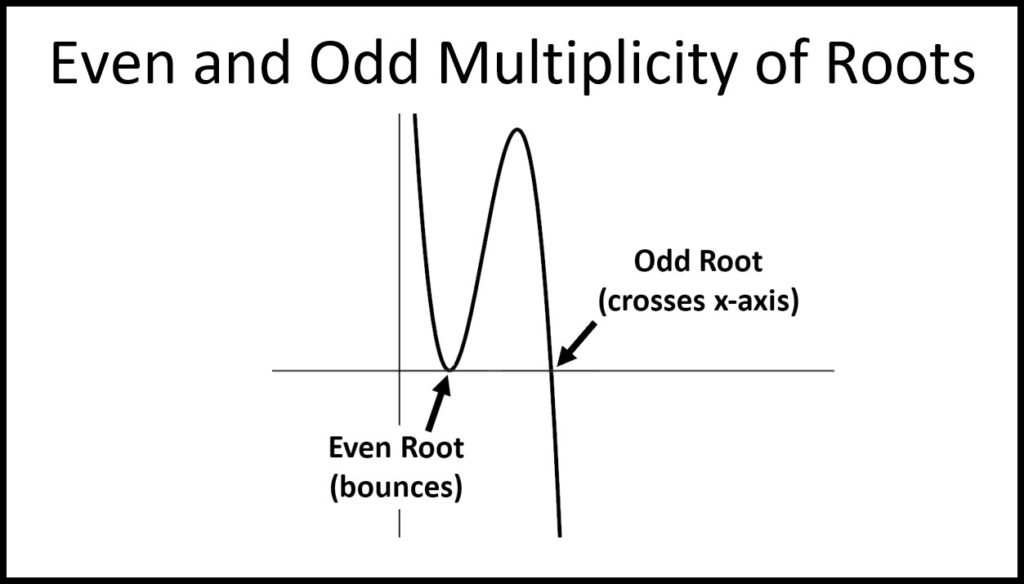
\(\bullet\text{ Multiplicity of Roots}\)
\(\,\,\,\,\,\,\,\,\) \(…\)
\(…\)
\(\bullet\text{ Rational Zero Theorem}\)
\(\,\,\,\,\,\,\,\, \pm 1,\pm 2,\pm 3,\pm 4,\pm 6,\pm 12…\)
\(\bullet\text{ Descartes Rule of Signs}\)
\(\,\)
\(\bullet\text{ Roots and Zeroes}\)
\(\,\,\,\,\,\,\,\,\text{Solve for }x. 3x^2+4x=0…\)
\(\bullet\text{ Linear Factored Form}\)
\(\,\,\,\,\,\,\,\,f(x)=(x+4)(x+1)(x−3)…\)
\(\bullet\text{ Polynomial Inequalities}\)
\(\,\,\,\,\,\,\,\,x^3-4x^2-4x+16 \gt 0…\)
\(\bullet\text{ Andymath Homepage}\)
In Summary
The complex conjugate of a complex number is a number that is obtained by changing the sign of the imaginary part of the number. For example, the complex conjugate of 4 + 3i is 4 – 3i, and the complex conjugate of 2 – 5i is 2 + 5i.
Complex conjugates are important in complex analysis, because they have many useful properties. For example, the product of a complex number and its complex conjugate is always a real number. If you multiply a complex number by its complex conjugate, the imaginary part of the result will be 0, so the result will be a real number.
Complex conjugates can also be used to simplify the division of complex numbers. When you divide complex numbers, you can multiply the numerator and denominator by the conjugate of the denominator, which has the effect of “canceling out” the imaginary part of the denominator. This makes the division much easier to perform, because it reduces the number of imaginary parts in the expression.
Complex conjugates are typically introduced in an algebra 2 course on complex numbers. Students learn about the properties of complex numbers, including how to add, subtract, multiply, and divide them, as well as how to find their conjugates. In general, complex conjugates are an important concept in complex analysis, and they have many useful properties that make working with complex numbers easier and more convenient. Complex conjugates have many real-world applications, particularly in the fields of engineering, physics, and electrical engineering.