

When adding and subtracting complex numbers you combine the like terms. The real terms get combined and the imaginary terms (containing \(i\)) get combined.
\((a + bi) + (c + di) = (a + c) + (b + d)i\)
\((a + bi)-(c + di) = (a-c) + (b-d)i\)
Practice Problems
\(\textbf{1)}\) Simplify \( (6+4i)+(3-2i) \) The answer is \( 9+2i \)
\(\textbf{2)}\) Simplify \( (5-3i)-(3+2i) \) The answer is \( 2-5i \)
\(\textbf{3)}\) Simplify \( (7-5i)+(7-3i) \)
The answer is \( 14-8i \)
\(\textbf{4)}\) Simplify \( (2+i)-(3-2i) \)
The answer is \( -1+3i \)
\(\textbf{5)}\) Simplify \( (15+6i)+(5-6i) \)
The answer is \( 20 \)
\(\textbf{6)}\) Simplify \( (8+3i)-(8-3i) \)
The answer is \( 6i \)
\(\textbf{7)}\) Simplify \( (2+5i)+(2+5i) \)
The answer is \( 4+10i \)
\(\textbf{8)}\) Simplify \( (3+6i)+(-5+2i) \)
The answer is \( -2+8i \)
\(\textbf{9)}\) Simplify \( (1+i)+(3+4i) \)
The answer is \( 4+5i \)
\(\textbf{10)}\) Simplify \( (2+3i)-(3+6i) \)
The answer is \( -1-3i \)
\(\textbf{11)}\) Simplify \( (4-2i)+(3-4i) \)
The answer is \( 7-6i \)
\(\textbf{12)}\) Simplify \( (-2+5i)+(1-3i) \)
The answer is \( -1+2i \)
\(\textbf{13)}\) Simplify \( (-3+2i)-(4-2i) \)
The answer is \( -7+4i \)
\(\textbf{14)}\) Simplify \( (6+7i)-(2-3i) \)
The answer is \( 4+10i \)
\(\textbf{15)}\) Simplify \( (1+2i)+(2-5i) \)
The answer is \( 3-3i \)
\(\textbf{16)}\) Simplify \( (5-6i)-(3+2i) \)
The answer is \( 2-8i \)
\(\textbf{17)}\) Simplify \( (4+3i)-(5+4i) \)
The answer is \( -1-i \)
\(\textbf{18)}\) Simplify \( (2+5i)+(3-6i) \)
The answer is \( 5-i \)
\(\textbf{19)}\) Simplify \( (5-2i)-(2+3i) \)
The answer is \( 3-5i \)
\(\textbf{20)}\) Simplify \( (3+4i)-(4-2i) \)
The answer is \( -1+6i \)
See Related Pages\(\)
\(\bullet\text{ Complex Numbers Calculator (Symbolab.com)}\)
\(\)
\(\bullet\text{ Adding and Subtracting Polynomials}\)
\(\,\,\,\,\,\,\,\,(4d+7)−(2d−5)…\)
\(\bullet\text{ Multiplying Polynomials}\)
\(\,\,\,\,\,\,\,\,(x+2)(x^2+3x−5)…\)
\(\bullet\text{ Dividing Polynomials}\)
\(\,\,\,\,\,\,\,\,(x^3-8)÷(x-2)…\)
\(\bullet\text{ Dividing Polynomials (Synthetic Division)}\)
\(\,\,\,\,\,\,\,\,(x^3-8)÷(x-2)…\)
\(\bullet\text{ Synthetic Substitution}\)
\(\,\,\,\,\,\,\,\,f(x)=4x^4−3x^2+8x−2…\)
\(\bullet\text{ End Behavior}\)
\(\,\,\,\,\,\,\,\, \text{As } x\rightarrow \infty, \quad f(x)\rightarrow \infty \)
\(\,\,\,\,\,\,\,\, \text{As } x\rightarrow -\infty, \quad f(x)\rightarrow \infty… \)
\(\bullet\text{ Completing the Square}\)
\(\,\,\,\,\,\,\,\,x^2+10x−24=0…\)
\(\bullet\text{ Quadratic Formula and the Discriminant}\)
\(\,\,\,\,\,\,\,\,x=-b \pm \displaystyle\frac{\sqrt{b^2-4ac}}{2a}…\)
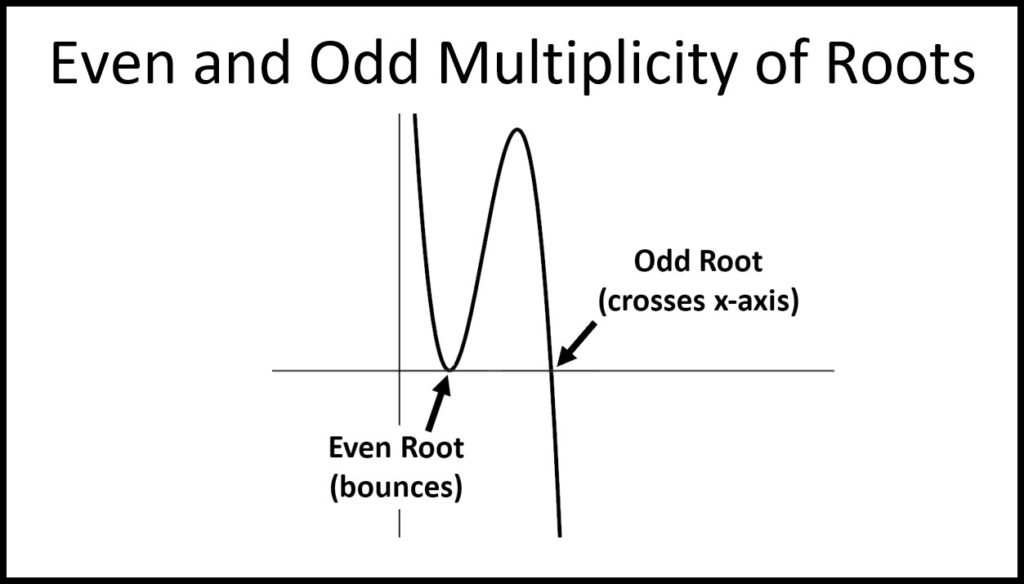
\(\bullet\text{ Multiplicity of Roots}\)
\(\,\,\,\,\,\,\,\,\) \(…\)
\(…\)
\(\bullet\text{ Rational Zero Theorem}\)
\(\,\,\,\,\,\,\,\, \pm 1,\pm 2,\pm 3,\pm 4,\pm 6,\pm 12…\)
\(\bullet\text{ Descartes Rule of Signs}\)
\(\,\)
\(\bullet\text{ Roots and Zeroes}\)
\(\,\,\,\,\,\,\,\,\text{Solve for }x. 3x^2+4x=0…\)
\(\bullet\text{ Linear Factored Form}\)
\(\,\,\,\,\,\,\,\,f(x)=(x+4)(x+1)(x−3)…\)
\(\bullet\text{ Polynomial Inequalities}\)
\(\,\,\,\,\,\,\,\,x^3-4x^2-4x+16 \gt 0…\)
\(\bullet\text{ Andymath Homepage}\)
About Andymath.com
Andymath.com is a free math website with the mission of helping students, teachers and tutors find helpful notes, useful sample problems with answers including step by step solutions, and other related materials to supplement classroom learning. If you have any requests for additional content, please contact Andy at tutoring@andymath.com. He will promptly add the content.
Topics cover Elementary Math, Middle School, Algebra, Geometry, Algebra 2/Pre-calculus/Trig, Calculus and Probability/Statistics. In the future, I hope to add Physics and Linear Algebra content.
Visit me on Youtube, Tiktok, Instagram and Facebook. Andymath content has a unique approach to presenting mathematics. The clear explanations, strong visuals mixed with dry humor regularly get millions of views. We are open to collaborations of all types, please contact Andy at tutoring@andymath.com for all enquiries. To offer financial support, visit my Patreon page. Let’s help students understand the math way of thinking!
Thank you for visiting. How exciting!
<!–
In Summary
A complex number is a number that can be written in the form a + bi, where a and b are real numbers and i is the imaginary unit, which can be thought of as \(\sqrt{-1}\). The number a is called the real part of the complex number, and the number bi is called the imaginary part.
Complex numbers are typically introduced in high school algebra classes, but the concept of complex numbers is important for many higher-level math and science courses, such as electrical engineering, physics, and computer science. It is also commonly used in many real-world applications, such as in signal processing and computer graphics.
One interesting fact about complex numbers is that they can be used to represent points in two-dimensional space, such as on a coordinate plane. This is because the real part of a complex number can be thought of as the x-coordinate of a point, and the imaginary part can be thought of as the y-coordinate. This property of complex numbers is useful for many applications, such as in geometry, engineering, and computer graphics.
There are many real-world examples of complex numbers being used in various fields. For instance, in electrical engineering, complex numbers are used to represent alternating currents and voltages, and to analyze the behavior of electrical circuits. In physics, complex numbers are used to represent the wave properties of particles, or to model the behavior of systems with multiple dimensions. In computer science, complex numbers are used in algorithms for solving problems such as searching and sorting data, or for encrypting and decrypting messages. In finance, complex numbers are used to model the relationship between the supply and demand of a stock, or to calculate the value of an investment. Overall, complex numbers are a useful and versatile tool for representing and analyzing many different real-world phenomena.
The term “complex number” itself was coined by the Swiss mathematician Leonhard Euler in the 18th century, and he made many important contributions to the study of complex numbers, including the development of many of the rules and techniques for manipulating and solving equations involving complex numbers. The study of complex numbers continues to be an active area of research in mathematics, with many new results and applications being discovered today.
There are several topics that are related to complex numbers, including algebra, trigonometry, and calculus. Algebra is the branch of mathematics that deals with the manipulation of mathematical expressions and equations, and it is a fundamental concept for understanding complex numbers. Trigonometry is a branch of mathematics that deals with the relationships between the sides and angles of triangles, and it is related to complex numbers, since trigonometric functions can be defined using complex numbers. Calculus is a branch of mathematics that deals with the study of rates of change and the accumulation of quantities, and it is also related to complex numbers, since many equations involving complex numbers can be solved using calculus. Overall, complex numbers are a fundamental and important concept in many different branches of mathematics.