

Coterminal angles are angles that share the same initial side and terminal side. In degrees, coterminal angles differ by multiples of \(360^\circ\), and in radians, they differ by multiples of \(2\pi\). These problems practice finding positive and negative coterminal angles in both degree and radian measure.
Notes

Practice Problems
Find 2 coterminal angles (one positive and one negative)
\(\textbf{1)}\) Find 2 coterminal angles (one positive and one negative)
\(\theta=100^{\circ}\) The answer is \(460^{\circ},\,-260^{\circ}\)
\(\,\,\,\,\,100^{\circ}+360^{\circ}=460^{\circ}\)
\(\,\,\,\,\,100^{\circ}-360^{\circ}=-260^{\circ}\)

\(\,\,\,\,\,100^{\circ}+360^{\circ}=460^{\circ}\)
\(\,\,\,\,\,100^{\circ}-360^{\circ}=-260^{\circ}\)
\(\textbf{2)}\) Find 2 coterminal angles (one positive and one negative)
\(\theta=641^{\circ}\) The answer is \(281^{\circ},\,-79^{\circ}\)
\(\,\,\,\,\,641^{\circ}-360^{\circ}=281^{\circ}\)
\(\,\,\,\,\,281^{\circ}-360^{\circ}=-79^{\circ}\)
\(\,\,\,\,\,641^{\circ}-360^{\circ}=281^{\circ}\)
\(\,\,\,\,\,281^{\circ}-360^{\circ}=-79^{\circ}\)
\(\textbf{3)}\) Find 2 coterminal angles (one positive and one negative)
\(\theta=-281^{\circ}\) The answer is \(79^{\circ},\,-641^{\circ}\)
\(\,\,\,\,\,-281^{\circ} + 360^{\circ} = 79^{\circ}\)
\(\,\,\,\,\,79^{\circ} – 360^{\circ} = -641^{\circ}\)
\(\,\,\,\,\,-281^{\circ} + 360^{\circ} = 79^{\circ}\)
\(\,\,\,\,\,79^{\circ} – 360^{\circ} = -641^{\circ}\)
\(\textbf{4)}\) Find 2 coterminal angles (one positive and one negative)
\(\theta=40^{\circ}\) The answer is \(400^{\circ},\,-320^{\circ}\)
\(\,\,\,\,\,40^{\circ} + 360^{\circ} = 400^{\circ}\)
\(\,\,\,\,\,40^{\circ} – 360^{\circ} = -320^{\circ}\)
\(\,\,\,\,\,40^{\circ} + 360^{\circ} = 400^{\circ}\)
\(\,\,\,\,\,40^{\circ} – 360^{\circ} = -320^{\circ}\)
\(\textbf{5)}\) Find 2 coterminal angles (one positive and one negative)
\(x=\displaystyle\frac{\pi}{3}\) The answer is \(\frac{7\pi}{3},\,-\frac{5\pi}{3}\)
\(\,\,\,\,\,x=\frac{\pi}{3} + 2\pi = \frac{\pi}{3} + \frac{6\pi}{3} = \frac{7\pi}{3}\)
\(\,\,\,\,\,x=\frac{\pi}{3} – 2\pi = \frac{\pi}{3} – \frac{6\pi}{3} = -\frac{5\pi}{3}\)
\(\,\,\,\,\,x=\frac{\pi}{3} + 2\pi = \frac{\pi}{3} + \frac{6\pi}{3} = \frac{7\pi}{3}\)
\(\,\,\,\,\,x=\frac{\pi}{3} – 2\pi = \frac{\pi}{3} – \frac{6\pi}{3} = -\frac{5\pi}{3}\)
\(\textbf{6)}\) Find 2 coterminal angles (one positive and one negative)
\(x=\displaystyle\frac{3\pi}{4}\) The answer is \(\frac{11\pi}{4},\,-\frac{5\pi}{4}\)
\(\,\,\,\,\,x=\frac{3\pi}{4} + 2\pi = \frac{3\pi}{4} + \frac{8\pi}{4} = \frac{11\pi}{4}\)
\(\,\,\,\,\,x=\frac{3\pi}{4} – 2\pi = \frac{3\pi}{4} – \frac{8\pi}{4} = -\frac{5\pi}{4}\)
\(\,\,\,\,\,x=\frac{3\pi}{4} + 2\pi = \frac{3\pi}{4} + \frac{8\pi}{4} = \frac{11\pi}{4}\)
\(\,\,\,\,\,x=\frac{3\pi}{4} – 2\pi = \frac{3\pi}{4} – \frac{8\pi}{4} = -\frac{5\pi}{4}\)
\(\textbf{7)}\) Find 2 coterminal angles (one positive and one negative)
\(x=\displaystyle\frac{7\pi}{15}\) The answer is \(\frac{37\pi}{15},\,-\frac{23\pi}{15}\)
\(\,\,\,\,\,x=\frac{7\pi}{15} + 2\pi = \frac{7\pi}{15} + \frac{30\pi}{15} = \frac{37\pi}{15}\)
\(\,\,\,\,\,x=\frac{7\pi}{15} – 2\pi = \frac{7\pi}{15} – \frac{30\pi}{15} = -\frac{23\pi}{15}\)
\(\,\,\,\,\,x=\frac{7\pi}{15} + 2\pi = \frac{7\pi}{15} + \frac{30\pi}{15} = \frac{37\pi}{15}\)
\(\,\,\,\,\,x=\frac{7\pi}{15} – 2\pi = \frac{7\pi}{15} – \frac{30\pi}{15} = -\frac{23\pi}{15}\)
\(\textbf{8)}\) Find 2 coterminal angles (one positive and one negative)
\(x=\displaystyle\frac{\pi}{7}\) The answer is \(\frac{15\pi}{7},\,-\frac{13\pi}{7}\)
\(\,\,\,\,\,x=\frac{\pi}{7} + 2\pi = \frac{\pi}{7} + \frac{14\pi}{7} = \frac{15\pi}{7}\)
\(\,\,\,\,\,x=\frac{\pi}{7} – 2\pi = \frac{\pi}{7} – \frac{14\pi}{7} = -\frac{13\pi}{7}\)
\(\,\,\,\,\,x=\frac{\pi}{7} + 2\pi = \frac{\pi}{7} + \frac{14\pi}{7} = \frac{15\pi}{7}\)
\(\,\,\,\,\,x=\frac{\pi}{7} – 2\pi = \frac{\pi}{7} – \frac{14\pi}{7} = -\frac{13\pi}{7}\)
\(\textbf{9)}\) Find 2 coterminal angles (one positive and one negative)
\(\theta=215^{\circ}\) The answer is \(575^{\circ},\,-145^{\circ}\)
\(\,\,\,\,\,215^{\circ}+360^{\circ}=575^{\circ}\)
\(\,\,\,\,\,215^{\circ}-360^{\circ}=-145^{\circ}\)
\(\,\,\,\,\,215^{\circ}+360^{\circ}=575^{\circ}\)
\(\,\,\,\,\,215^{\circ}-360^{\circ}=-145^{\circ}\)
\(\textbf{10)}\) Find 2 coterminal angles (one positive and one negative)
\(\theta=-150^{\circ}\) The answer is \(210^{\circ},\,-510^{\circ}\)
\(\,\,\,\,\,-150^{\circ}+360^{\circ}=210^{\circ}\)
\(\,\,\,\,\,-150^{\circ}-360^{\circ}=-510^{\circ}\)
\(\,\,\,\,\,-150^{\circ}+360^{\circ}=210^{\circ}\)
\(\,\,\,\,\,-150^{\circ}-360^{\circ}=-510^{\circ}\)
\(\textbf{11)}\) Find 2 coterminal angles (one positive and one negative)
\(\theta=330^{\circ}\) The answer is \(690^{\circ},\,-30^{\circ}\)
\(\,\,\,\,\,330^{\circ}+360^{\circ}=690^{\circ}\)
\(\,\,\,\,\,330^{\circ}-360^{\circ}=-30^{\circ}\)
\(\,\,\,\,\,330^{\circ}+360^{\circ}=690^{\circ}\)
\(\,\,\,\,\,330^{\circ}-360^{\circ}=-30^{\circ}\)
\(\textbf{12)}\) Find 2 coterminal angles (one positive and one negative)
\(x=\displaystyle\frac{5\pi}{6}\) The answer is \(\frac{17\pi}{6},\,-\frac{7\pi}{6}\)
\(\,\,\,\,\,x=\frac{5\pi}{6} + 2\pi = \frac{5\pi}{6} + \frac{12\pi}{6} = \frac{17\pi}{6}\)
\(\,\,\,\,\,x=\frac{5\pi}{6} – 2\pi = \frac{5\pi}{6} – \frac{12\pi}{6} = -\frac{7\pi}{6}\)
\(\,\,\,\,\,x=\frac{5\pi}{6} + 2\pi = \frac{5\pi}{6} + \frac{12\pi}{6} = \frac{17\pi}{6}\)
\(\,\,\,\,\,x=\frac{5\pi}{6} – 2\pi = \frac{5\pi}{6} – \frac{12\pi}{6} = -\frac{7\pi}{6}\)
\(\textbf{13)}\) Find 2 coterminal angles (one positive and one negative)
\(x=\displaystyle\frac{2\pi}{5}\) The answer is \(\frac{12\pi}{5},\,-\frac{8\pi}{5}\)
\(\,\,\,\,\,x=\frac{2\pi}{5} + 2\pi = \frac{2\pi}{5} + \frac{10\pi}{5} = \frac{12\pi}{5}\)
\(\,\,\,\,\,x=\frac{2\pi}{5} – 2\pi = \frac{2\pi}{5} – \frac{10\pi}{5} = -\frac{8\pi}{5}\)
\(\,\,\,\,\,x=\frac{2\pi}{5} + 2\pi = \frac{2\pi}{5} + \frac{10\pi}{5} = \frac{12\pi}{5}\)
\(\,\,\,\,\,x=\frac{2\pi}{5} – 2\pi = \frac{2\pi}{5} – \frac{10\pi}{5} = -\frac{8\pi}{5}\)
\(\textbf{14)}\) Find 2 coterminal angles (one positive and one negative)
\(x=\displaystyle\frac{11\pi}{9}\) The answer is \(\frac{29\pi}{9},\,-\frac{7\pi}{9}\)
\(\,\,\,\,\,x=\frac{11\pi}{9} + 2\pi = \frac{11\pi}{9} + \frac{18\pi}{9} = \frac{29\pi}{9}\)
\(\,\,\,\,\,x=\frac{11\pi}{9} – 2\pi = \frac{11\pi}{9} – \frac{18\pi}{9} = -\frac{7\pi}{9}\)
\(\,\,\,\,\,x=\frac{11\pi}{9} + 2\pi = \frac{11\pi}{9} + \frac{18\pi}{9} = \frac{29\pi}{9}\)
\(\,\,\,\,\,x=\frac{11\pi}{9} – 2\pi = \frac{11\pi}{9} – \frac{18\pi}{9} = -\frac{7\pi}{9}\)
\(\textbf{15)}\) Find 2 coterminal angles (one positive and one negative)
\(x=\displaystyle\frac{4\pi}{11}\) The answer is \(\frac{26\pi}{11},\,-\frac{18\pi}{11}\)
\(\,\,\,\,\,x=\frac{4\pi}{11} + 2\pi = \frac{4\pi}{11} + \frac{22\pi}{11} = \frac{26\pi}{11}\)
\(\,\,\,\,\,x=\frac{4\pi}{11} – 2\pi = \frac{4\pi}{11} – \frac{22\pi}{11} = -\frac{18\pi}{11}\)
\(\,\,\,\,\,x=\frac{4\pi}{11} + 2\pi = \frac{4\pi}{11} + \frac{22\pi}{11} = \frac{26\pi}{11}\)
\(\,\,\,\,\,x=\frac{4\pi}{11} – 2\pi = \frac{4\pi}{11} – \frac{22\pi}{11} = -\frac{18\pi}{11}\)
Challenge Problems
\(\textbf{16)}\) Find 2 coterminal angles (one positive and one negative)
\(x=\displaystyle\frac{9\pi}{8}\) The answer is \(\frac{25\pi}{8},\,-\frac{7\pi}{8}\)
\(\,\,\,\,\,x=\frac{9\pi}{8} + 2\pi = \frac{9\pi}{8} + \frac{16\pi}{8} = \frac{25\pi}{8}\)
\(\,\,\,\,\,x=\frac{9\pi}{8} – 2\pi = \frac{9\pi}{8} – \frac{16\pi}{8} = -\frac{7\pi}{8}\)
\(\,\,\,\,\,x=\frac{9\pi}{8} + 2\pi = \frac{9\pi}{8} + \frac{16\pi}{8} = \frac{25\pi}{8}\)
\(\,\,\,\,\,x=\frac{9\pi}{8} – 2\pi = \frac{9\pi}{8} – \frac{16\pi}{8} = -\frac{7\pi}{8}\)
\(\textbf{17)}\) Find 2 coterminal angles (one positive and one negative)
\(\theta=-725^\circ\) The answer is \(-5^\circ,\,355^\circ\)
\(\,\,\,\,\,-725^\circ+360^\circ=-365^\circ\)
\(\,\,\,\,\,-365^\circ+360^\circ=-5^\circ\)
\(\,\,\,\,\,-5^\circ+360^\circ=355^\circ\)
\(\,\,\,\,\,-725^\circ+360^\circ=-365^\circ\)
\(\,\,\,\,\,-365^\circ+360^\circ=-5^\circ\)
\(\,\,\,\,\,-5^\circ+360^\circ=355^\circ\)
\(\textbf{18)}\) Find 2 coterminal angles (one positive and one negative)
\(\theta=1080^\circ\) The answer is \(720^\circ,\,-360^\circ\)
\(\,\,\,\,\,1080^\circ-360^\circ=720^\circ\)
\(\,\,\,\,\,1080^\circ-1440^\circ=-360^\circ\)
\(\,\,\,\,\,1080^\circ-360^\circ=720^\circ\)
\(\,\,\,\,\,1080^\circ-1440^\circ=-360^\circ\)
\(\textbf{19)}\) Find 2 coterminal angles (one positive and one negative)
\(x=-\displaystyle\frac{13\pi}{6}\) The answer is \(-\frac{\pi}{6},\,\frac{11\pi}{6}\)
\(\,\,\,\,\,x=-\frac{13\pi}{6}+2\pi=-\frac{13\pi}{6}+\frac{12\pi}{6}=-\frac{\pi}{6}\)
\(\,\,\,\,\,x=-\frac{\pi}{6}+2\pi=-\frac{\pi}{6}+\frac{12\pi}{6}=\frac{11\pi}{6}\)
\(\,\,\,\,\,x=-\frac{13\pi}{6}+2\pi=-\frac{13\pi}{6}+\frac{12\pi}{6}=-\frac{\pi}{6}\)
\(\,\,\,\,\,x=-\frac{\pi}{6}+2\pi=-\frac{\pi}{6}+\frac{12\pi}{6}=\frac{11\pi}{6}\)
\(\textbf{20)}\) Find 2 coterminal angles (one positive and one negative)
\(x=\displaystyle\frac{17\pi}{10}\) The answer is \(\frac{37\pi}{10},\,-\frac{3\pi}{10}\)
\(\,\,\,\,\,x=\frac{17\pi}{10}+2\pi=\frac{17\pi}{10}+\frac{20\pi}{10}=\frac{37\pi}{10}\)
\(\,\,\,\,\,x=\frac{17\pi}{10}-2\pi=\frac{17\pi}{10}-\frac{20\pi}{10}=-\frac{3\pi}{10}\)
\(\,\,\,\,\,x=\frac{17\pi}{10}+2\pi=\frac{17\pi}{10}+\frac{20\pi}{10}=\frac{37\pi}{10}\)
\(\,\,\,\,\,x=\frac{17\pi}{10}-2\pi=\frac{17\pi}{10}-\frac{20\pi}{10}=-\frac{3\pi}{10}\)
See Related Pages\(\)
\(\bullet\text{ Right Triangle Trigonometry}\)
\(\,\,\,\,\,\,\,\,\sin{(x)}=\displaystyle\frac{\text{opp}}{\text{hyp}}…\)
\(\bullet\text{ Angle of Depression and Elevation}\)
\(\,\,\,\,\,\,\,\,\text{Angle of Depression}=\text{Angle of Elevation}…\)
\(\bullet\text{ Convert to Radians and to Degrees}\)
\(\,\,\,\,\,\,\,\,\text{Radians} \rightarrow \text{Degrees}, \times \displaystyle \frac{180^{\circ}}{\pi}…\)
\(\bullet\text{ Degrees, Minutes and Seconds}\)
\(\,\,\,\,\,\,\,\,48^{\circ}34’21”…\)
\(\bullet\text{ Coterminal Angles}\)
\(\,\,\,\,\,\,\,\,\pm 360^{\circ} \text { or } \pm 2\pi n…\)
\(\bullet\text{ Reference Angles}\)
\(\,\,\,\,\,\,\,\,\)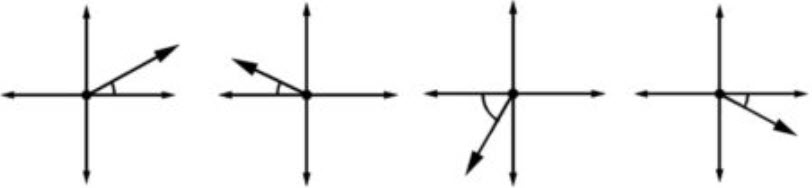 \(…\)
\(…\)
\(\bullet\text{ Find All 6 Trig Functions}\)
\(\,\,\,\,\,\,\,\,\) \(…\)
\(…\)
\(\bullet\text{ Unit Circle}\)
\(\,\,\,\,\,\,\,\,\sin{(60^{\circ})}=\displaystyle\frac{\sqrt{3}}{2}…\)
\(\bullet\text{ Law of Sines}\)
\(\,\,\,\,\,\,\,\,\displaystyle\frac{\sin{A}}{a}=\frac{\sin{B}}{b}=\frac{\sin{C}}{c}\) 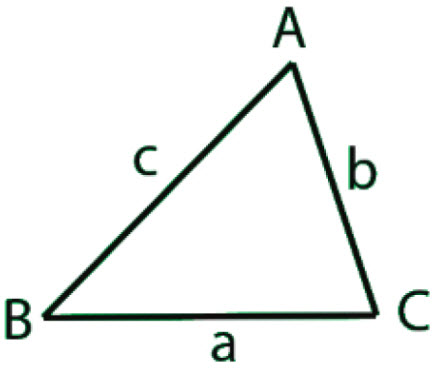 \(…\)
\(…\)
\(\bullet\text{ Area of SAS Triangles}\)
\(\,\,\,\,\,\,\,\,\text{Area}=\frac{1}{2}ab \sin{C}\) \(…\)
\(\bullet\text{ Law of Cosines}\)
\(\,\,\,\,\,\,\,\,a^2=b^2+c^2-2bc \cos{A}\) \(…\)
\(\bullet\text{ Area of SSS Triangles (Heron’s formula)}\)
\(\,\,\,\,\,\,\,\,\text{Area}=\sqrt{s(s-a)(s-b)(s-c)}\) \(…\)
\(\bullet\text{ Geometric Mean}\)
\(\,\,\,\,\,\,\,\,x=\sqrt{ab} \text{ or } \displaystyle\frac{a}{x}=\frac{x}{b}…\)
\(\bullet\text{ Geometric Mean- Similar Right Triangles}\)
\(\,\,\,\,\,\,\,\,\)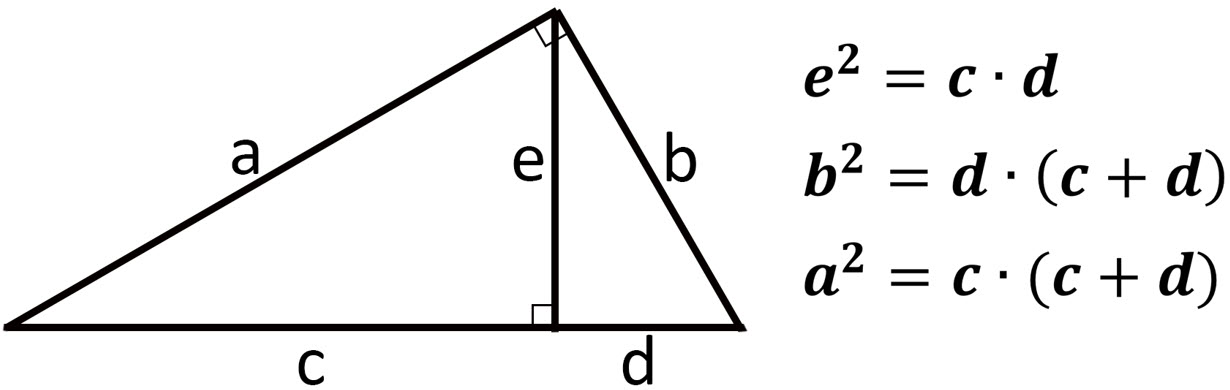 \(…\)
\(…\)
\(\bullet\text{ Inverse Trigonmetric Functions}\)
\(\,\,\,\,\,\,\,\,\sin {\left(cos^{-1}\left(\frac{3}{5}\right)\right)}…\)
\(\bullet\text{ Sum and Difference of Angles Formulas}\)
\(\,\,\,\,\,\,\,\,\sin{(A+B)}=\sin{A}\cos{B}+\cos{A}\sin{B}…\)
\(\bullet\text{ Double-Angle and Half-Angle Formulas}\)
\(\,\,\,\,\,\,\,\,\sin{(2A)}=2\sin{(A)}\cos{(A)}…\)
\(\bullet\text{ Trigonometry-Pythagorean Identities}\)
\(\,\,\,\,\,\,\,\,\sin^2{(x)}+\cos^2{(x)}=1…\)
\(\bullet\text{ Product-Sum Identities}\)
\(\,\,\,\,\,\,\,\,\cos{\alpha}\cos{\beta}=\left(\displaystyle\frac{\cos{(\alpha+\beta)}+\cos{(\alpha-\beta)}}{2}\right)…\)
\(\bullet\text{ Cofunction Identities}\)
\(\,\,\,\,\,\,\,\,\sin{(x)}=\cos{(\frac{\pi}{2}-x)}…\)
\(\bullet\text{ Proving Trigonometric Identities}\)
\(\,\,\,\,\,\,\,\,\sec{x}-\cos{x}=\displaystyle\frac{\tan^2{x}}{\sec{x}}…\)
\(\bullet\text{ Graphing Trig Functions- sin and cos}\)
\(\,\,\,\,\,\,\,\,f(x)=A \sin{B(x-c)}+D \) 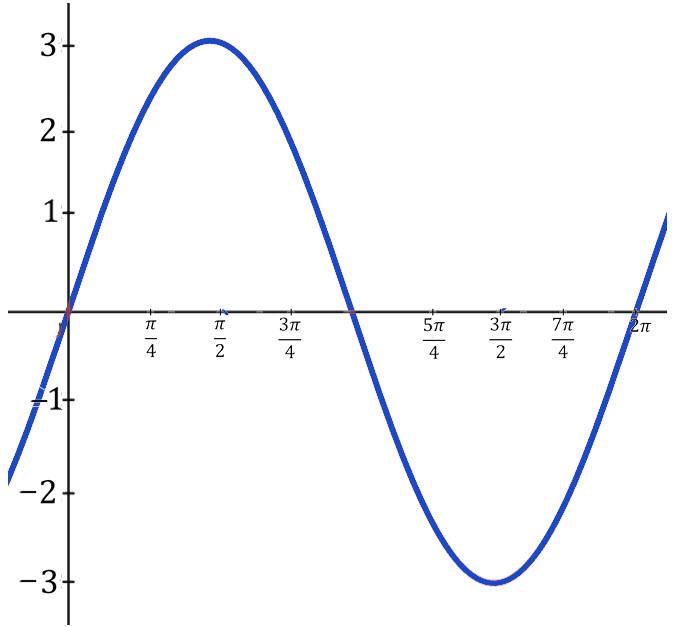 \(…\)
\(…\)
\(\bullet\text{ Solving Trigonometric Equations}\)
\(\,\,\,\,\,\,\,\,2\cos{(x)}=\sqrt{3}…\)